
- 資料結構與演算法
- DSA - 首頁
- DSA - 概述
- DSA - 環境搭建
- DSA - 演算法基礎
- DSA - 漸進分析
- 資料結構
- DSA - 資料結構基礎
- DSA - 資料結構和型別
- DSA - 陣列資料結構
- 連結串列
- DSA - 連結串列資料結構
- DSA - 雙向連結串列資料結構
- DSA - 迴圈連結串列資料結構
- 棧與佇列
- DSA - 棧資料結構
- DSA - 表示式解析
- DSA - 佇列資料結構
- 搜尋演算法
- DSA - 搜尋演算法
- DSA - 線性搜尋演算法
- DSA - 二分搜尋演算法
- DSA - 插值搜尋
- DSA - 跳躍搜尋演算法
- DSA - 指數搜尋
- DSA - 斐波那契搜尋
- DSA - 子列表搜尋
- DSA - 雜湊表
- 排序演算法
- DSA - 排序演算法
- DSA - 氣泡排序演算法
- DSA - 插入排序演算法
- DSA - 選擇排序演算法
- DSA - 歸併排序演算法
- DSA - 希爾排序演算法
- DSA - 堆排序
- DSA - 桶排序演算法
- DSA - 計數排序演算法
- DSA - 基數排序演算法
- DSA - 快速排序演算法
- 圖資料結構
- DSA - 圖資料結構
- DSA - 深度優先遍歷
- DSA - 廣度優先遍歷
- DSA - 生成樹
- 樹資料結構
- DSA - 樹資料結構
- DSA - 樹的遍歷
- DSA - 二叉搜尋樹
- DSA - AVL樹
- DSA - 紅黑樹
- DSA - B樹
- DSA - B+樹
- DSA - 伸展樹
- DSA - 字典樹
- DSA - 堆資料結構
- 遞迴
- DSA - 遞迴演算法
- DSA - 使用遞迴實現漢諾塔問題
- DSA - 使用遞迴實現斐波那契數列
- 分治法
- DSA - 分治法
- DSA - 最大最小問題
- DSA - Strassen矩陣乘法
- DSA - Karatsuba演算法
- 貪心演算法
- DSA - 貪心演算法
- DSA - 旅行商問題(貪心演算法)
- DSA - Prim最小生成樹演算法
- DSA - Kruskal最小生成樹演算法
- DSA - Dijkstra最短路徑演算法
- DSA - 地圖著色演算法
- DSA - 分數揹包問題
- DSA - 帶截止日期的作業排序
- DSA - 最優合併模式演算法
- 動態規劃
- DSA - 動態規劃
- DSA - 矩陣鏈乘法
- DSA - Floyd-Warshall演算法
- DSA - 0-1揹包問題
- DSA - 最長公共子序列演算法
- DSA - 旅行商問題(動態規劃)
- 近似演算法
- DSA - 近似演算法
- DSA - 頂點覆蓋演算法
- DSA - 集合覆蓋問題
- DSA - 旅行商問題(近似演算法)
- 隨機化演算法
- DSA - 隨機化演算法
- DSA - 隨機化快速排序演算法
- DSA - Karger最小割演算法
- DSA - Fisher-Yates洗牌演算法
- DSA有用資源
- DSA - 問答
- DSA - 快速指南
- DSA - 有用資源
- DSA - 討論
騎士巡遊問題
什麼是騎士巡遊問題?
在騎士巡遊問題中,我們得到一個大小為NxN的空棋盤和一個騎士。在國際象棋中,騎士是一個看起來像馬的棋子。假設它可以從棋盤上的任何位置開始。現在,我們的任務是檢查騎士是否可以訪問棋盤上的所有方格。當它可以訪問所有方格時,列印從起始位置到達該位置所需的跳躍次數。
騎士可以有兩種方式完成它的巡遊。在第一種方式中,騎士移動一步並返回到起始位置形成一個迴圈,這稱為閉合巡遊。在第二種方式即開放巡遊中,它在棋盤上的任何位置結束。
對於不熟悉國際象棋的人,請注意騎士的移動方式很特殊。它可以在每個方向上水平移動兩個方格和垂直移動一個方格,或者垂直移動兩個方格和水平移動一個方格。因此,完整的移動看起來像英文字母'L'。

假設給定棋盤的大小為8,並且騎士位於棋盤的左上角位置。接下來的可能的移動如下所示:
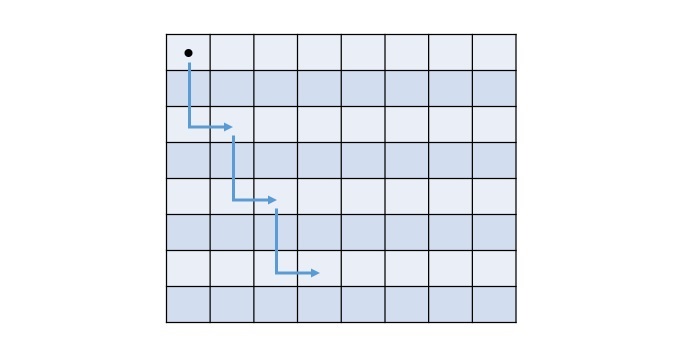
上面棋盤中的每個單元格都包含一個數字,表示從哪裡開始以及騎士需要多少步才能到達一個單元格。單元格的最終值將由以下矩陣表示:
  0  59  38  33  30  17   8  63
 37  34  31  60   9  62  29  16
 58   1  36  39  32  27  18   7
 35  48  41  26  61  10  15  28
 42  57   2  49  40  23   6  19
 47  50  45  54  25  20  11  14
 56  43  52   3  22  13  24   5
 51  46  55  44  53   4  21  12
請記住,此問題可能有多個解決方案,上面的矩陣是一個可能的解決方案。
解決騎士巡遊問題的一種方法是逐一生成所有巡遊,然後檢查它們是否滿足指定的約束條件。但是,這很耗時,不是一種有效的方法。
回溯法解決騎士巡遊問題
解決此問題的另一種方法是使用回溯法。這是一種嘗試不同可能性直到找到解決方案或嘗試所有選項的技術。它包括選擇一個移動,執行它,然後遞迴地嘗試解決問題的其餘部分。如果當前移動導致死衚衕,我們回溯並撤消該移動,然後嘗試另一個移動。
要使用回溯法解決騎士巡遊問題,請按照以下步驟操作:
從棋盤上的任何一個單元格開始,並將其標記為騎士已訪問。
將騎士移動到一個有效的未訪問單元格,並將其標記為已訪問。從任何一個單元格,騎士最多可以進行8次移動。
如果當前單元格無效或沒有通往解決方案的路徑,則回溯並嘗試其他可能通往解決方案的移動。
重複此過程,直到騎士的移動次數等於8 x 8 = 64。
示例
在下面的示例中,我們將實際演示如何解決騎士巡遊問題。
#include <stdio.h>
#define N 8
int sol[N][N];
//check place is in range and not assigned yet
int isValid(int x, int y) {
   return ( x >= 0 && x < N && y >= 0 && y < N && sol[x][y] == -1);
}
void displaySolution() {
   printf("The possible solution: \n");
   for (int x = 0; x < N; x++) {
      for (int y = 0; y < N; y++)
         printf("%3d ", sol[x][y]);
      printf("\n");
   }
}
int knightTour(int x, int y, int move, int xMove[N], int yMove[N]) {
   int xNext, yNext;
   //when the total board is covered
   if (move == N*N)
      return 1;
   for (int k = 0; k < 8; k++) {
      xNext = x + xMove[k];
      yNext = y + yMove[k];
      //check room is preoccupied or not
      if (isValid(xNext, yNext)) {
         sol[xNext][yNext] = move;
         if (knightTour(xNext, yNext, move+1, xMove, yMove) == 1)
            return 1;
         else
            // backtracking
            sol[xNext][yNext] = -1;
      }
   }
   return 0;
}
int findKnightTourSol() {
   //initially set all values to -1 of solution matrix
   for (int x = 0; x < N; x++)
      for (int y = 0; y < N; y++)
         sol[x][y] = -1;
   //all possible moves for knight
   int xMove[8] = {  2, 1, -1, -2, -2, -1,  1,  2 };
   int yMove[8] = {  1, 2,  2,  1, -1, -2, -2, -1 };
   //starting from room (0, 0)
   sol[0][0]  = 0;
   if (knightTour(0, 0, 1, xMove, yMove) == 0) {
      printf("Solution does not exist");
      return 0;
   } else
      displaySolution();
   return 1;
}
int main() {
   findKnightTourSol();
   return 0;
}
#include <iostream>
#include <iomanip>
#define N 8
using namespace std;
int sol[N][N];
 //check place is in range and not assigned yet
bool isValid(int x, int y, int sol[N][N]) {
   return ( x >= 0 && x < N && y >= 0 && y < N && sol[x][y] == -1);
}
void displaySolution() {
   cout << "The possible solution: " << endl;
   for (int x = 0; x < N; x++) {
      for (int y = 0; y < N; y++)
         cout << setw(3) << sol[x][y] << " ";
      cout << endl;
   }
}
int knightTour(int x, int y, int move, int sol[N][N], int xMove[N], int yMove[N]) {
   int xNext, yNext;
   //when the total board is covered
   if (move == N*N)
      return true;
   for (int k = 0; k < 8; k++) {
      xNext = x + xMove[k];
      yNext = y + yMove[k];
      //check room is preoccupied or not
      if (isValid(xNext, yNext, sol)) {
         sol[xNext][yNext] = move;
         if (knightTour(xNext, yNext, move+1, sol, xMove, yMove) == true)
            return true;
         else
            // backtracking
            sol[xNext][yNext] = -1;
      }
   }
   return false;
}
bool findKnightTourSol() {
   //initially set all values to -1 of solution matrix
   for (int x = 0; x < N; x++)
      for (int y = 0; y < N; y++)
         sol[x][y] = -1;
   //all possible moves for knight
   int xMove[8] = {  2, 1, -1, -2, -2, -1,  1,  2 };
   int yMove[8] = {  1, 2,  2,  1, -1, -2, -2, -1 };
   //starting from room (0, 0)
   sol[0][0]  = 0;
   if (knightTour(0, 0, 1, sol, xMove, yMove) == false) {
      cout << "Solution does not exist";
      return false;
   } else
      displaySolution();
   return true;
}
int main() {
   findKnightTourSol();
}
import java.util.Arrays;
public class Main {
   static final int N = 8;
   static int[][] sol = new int[N][N];
   //check place is in range and not assigned yet
   static boolean isValid(int x, int y) {
      return (x >= 0 && x < N && y >= 0 && y < N && sol[x][y] == -1);
   }
   static void displaySolution() {
      System.out.println("The possible solution: ");
      for (int x = 0; x < N; x++) {
         for (int y = 0; y < N; y++)
            System.out.printf("%3d ", sol[x][y]);
         System.out.println();
      }
   }
   static boolean knightTour(int x, int y, int move, int[] xMove, int[] yMove) {
      int xNext, yNext;
      //when the total board is covered
      if (move == N*N)
         return true;
      for (int k = 0; k < 8; k++) {
         xNext = x + xMove[k];
         yNext = y + yMove[k];
         //check room is preoccupied or not
         if (isValid(xNext, yNext)) {
            sol[xNext][yNext] = move;
               if (knightTour(xNext, yNext, move+1, xMove, yMove))
                  return true;
               else
                  // backtracking
                  sol[xNext][yNext] = -1;
         }
      }
      return false;
   }
   static boolean findKnightTourSol() {
      //initially set all values to -1 of solution matrix
      for (int[] row : sol)
         Arrays.fill(row, -1);
         //all possible moves for knight
         int[] xMove = {2, 1, -1, -2, -2, -1, 1, 2};
         int[] yMove = {1, 2, 2, 1, -1, -2, -2, -1};
         //starting from room (0, 0)
         sol[0][0] = 0;
         if (!knightTour(0, 0, 1, xMove, yMove)) {
            System.out.println("Solution does not exist");
            return false;
         } else
            displaySolution();
      return true;
   }
   public static void main(String[] args) {
      findKnightTourSol();
   }
}
N = 8

# The solution matrix
sol = [[-1 for _ in range(N)] for _ in range(N)]

# Check if place is in range and not assigned yet
def isValid(x, y):
    return (x >= 0 and x < N and y >= 0 and y < N and sol[x][y] == -1)

# Function to print the solution
def displaySolution():
    print("The possible solution: ")
    for x in range(N):
        for y in range(N):
            print(f"{sol[x][y]:3}", end=" ")
        print()

# Recursive function to solve the problem
def knightTour(x, y, move, xMove, yMove):
    if move == N*N:
        return True
    for k in range(8):
        xNext = x + xMove[k]
        yNext = y + yMove[k]
        if isValid(xNext, yNext):
            sol[xNext][yNext] = move
            if knightTour(xNext, yNext, move+1, xMove, yMove):
                return True
            else:
                # Backtracking
                sol[xNext][yNext] = -1
    return False

def findKnightTourSol():
    # All possible moves for knight
    xMove = [2, 1, -1, -2, -2, -1, 1, 2]
    yMove = [1, 2, 2, 1, -1, -2, -2, -1]
    # Starting from room (0, 0)
    sol[0][0] = 0
    if not knightTour(0, 0, 1, xMove, yMove):
        print("Solution does not exist")
        return False
    else:
        displaySolution()
    return True

if __name__ == "__main__":
    findKnightTourSol()
輸出
The possible solution:
  0  59  38  33  30  17   8  63
 37  34  31  60   9  62  29  16
 58   1  36  39  32  27  18   7
 35  48  41  26  61  10  15  28
 42  57   2  49  40  23   6  19
 47  50  45  54  25  20  11  14
 56  43  52   3  22  13  24   5
 51  46  55  44  53   4  21  12