
- ReactJS 教程
- ReactJS - 首頁
- ReactJS - 簡介
- ReactJS - 路線圖
- ReactJS - 安裝
- ReactJS - 特性
- ReactJS - 優點與缺點
- ReactJS - 架構
- ReactJS - 建立 React 應用程式
- ReactJS - JSX
- ReactJS - 元件
- ReactJS - 巢狀元件
- ReactJS - 使用新建立的元件
- ReactJS - 元件集合
- ReactJS - 樣式
- ReactJS - 屬性 (props)
- ReactJS - 使用屬性建立元件
- ReactJS - props 驗證
- ReactJS - 建構函式
- ReactJS - 元件生命週期
- ReactJS - 事件管理
- ReactJS - 建立一個事件感知元件
- ReactJS - 在 Expense Manager APP 中引入事件
- ReactJS - 狀態管理
- ReactJS - 狀態管理 API
- ReactJS - 無狀態元件
- ReactJS - 使用 React Hooks 進行狀態管理
- ReactJS - 使用 React Hooks 進行元件生命週期管理
- ReactJS - 佈局元件
- ReactJS - 分頁
- ReactJS - Material UI
- ReactJS - Http 客戶端程式設計
- ReactJS - 表單程式設計
- ReactJS - 受控元件
- ReactJS - 非受控元件
- ReactJS - Formik
- ReactJS - 條件渲染
- ReactJS - 列表
- ReactJS - Keys
- ReactJS - 路由
- ReactJS - Redux
- ReactJS - 動畫
- ReactJS - Bootstrap
- ReactJS - 地圖
- ReactJS - 表格
- ReactJS - 使用 Flux 管理狀態
- ReactJS - 測試
- ReactJS - CLI 命令
- ReactJS - 構建和部署
- ReactJS - 示例
- Hooks
- ReactJS - Hooks 簡介
- ReactJS - 使用 useState
- ReactJS - 使用 useEffect
- ReactJS - 使用 useContext
- ReactJS - 使用 useRef
- ReactJS - 使用 useReducer
- ReactJS - 使用 useCallback
- ReactJS - 使用 useMemo
- ReactJS - 自定義 Hooks
- ReactJS 高階
- ReactJS - 可訪問性
- ReactJS - 程式碼分割
- ReactJS - Context
- ReactJS - 錯誤邊界
- ReactJS - 轉發 Refs
- ReactJS - 片段
- ReactJS - 高階元件
- ReactJS - 與其他庫整合
- ReactJS - 最佳化效能
- ReactJS - Profiler API
- ReactJS - Portals
- ReactJS - 無 ES6 ECMAScript 的 React
- ReactJS - 無 JSX 的 React
- ReactJS - 調和
- ReactJS - Refs 和 DOM
- ReactJS - 渲染 Props
- ReactJS - 靜態型別檢查
- ReactJS - 嚴格模式
- ReactJS - Web Components
- 其他概念
- ReactJS - 日期選擇器
- ReactJS - Helmet
- ReactJS - 內聯樣式
- ReactJS - PropTypes
- ReactJS - BrowserRouter
- ReactJS - DOM
- ReactJS - 走馬燈
- ReactJS - 圖示
- ReactJS - 表單元件
- ReactJS - 參考 API
- ReactJS 有用資源
- ReactJS - 快速指南
- ReactJS - 有用資源
- ReactJS - 討論
ReactJS - static contextType 屬性
React 中的 Context API 幫助我們快速處理和共享應用程式中的狀態。因此,我們將瞭解如何在 React 類元件中使用 static contextType 來讀取和使用上下文資料。
React 中的 Context 是一種在元件之間傳遞資料的方法,無需透過元件樹的每一層傳遞 props。這對於共享資料(如主題、使用者身份驗證或不同元件需要訪問的任何全域性資訊)非常有用。
語法
const MyContext = React.createContext();
首先,我們需要使用 React.createContext() 建立一個上下文。這將是我們想要在元件中訪問的上下文。
如何使用它?
要使用 Context API,我們可以按照以下步驟操作:
首先我們需要建立上下文。我們可以使用 createContext 函式來建立上下文。
接下來,我們將使用 Context Provider 包裝元件樹,以便為需要它的元件提供上下文。
要在函式元件中訪問上下文的值,我們將使用 useContext hook。要在類元件中訪問上下文,我們可以使用 static contextType 屬性。
示例
示例
在這個應用程式中,我們將顯示使用者是否已透過身份驗證。因此,我們將有一個 App 元件來管理使用者身份驗證的狀態(true 或 false)。它將使用 AuthContext.Provider 將身份驗證狀態提供給其子元件。然後,我們將建立一個 AuthStatus 元件,它將使用 static contextType 來訪問身份驗證上下文。我們將根據使用者是否登入顯示訊息。
import React, { createContext, Component } from 'react';

const AuthContext = createContext();
class App extends Component {
   state = {
      isAuthenticated: true,
   };
   render() {
      return (
         <AuthContext.Provider value={this.state.isAuthenticated}>
         <AuthStatus />
         </AuthContext.Provider>
      );
   }
}
class AuthStatus extends Component {
   static contextType = AuthContext;
   render() {
      const isAuthenticated = this.context;
      return (
         <div>
            <h1>User Authentication App</h1>
            {isAuthenticated ? <p>User is logged in</p> : <p>User is not logged in</p>}
         </div>
      );
   }
}

export default App;
輸出

因此,我們可以看到使用者已登入,因為我們將 isAuthenticated 狀態設定為 true。如果我們將其設定為 false,則它將顯示訊息“使用者未登入”。
示例 - 語言選擇應用程式
在這個應用程式中,我們將具有允許使用者選擇其首選語言的功能。因此,我們將有一個 App 元件。此元件將管理所選語言的狀態。它還將使用 LanguageContext.Provider 將語言狀態提供給其子元件。然後,我們將擁有另一個名為 LanguageSelector 的元件,該元件將使用 static contextType 來訪問語言上下文。它將呈現一個簡單的 UI,顯示所選語言。
import React, { createContext, Component } from 'react';

const LanguageContext = createContext();
class App extends Component {
   state = {
      language: 'English',
   };
   render() {
      return (
         <LanguageContext.Provider value={this.state.language}>
            <LanguageSelector />
         </LanguageContext.Provider>
      );
   }
}

class LanguageSelector extends Component {
   static contextType = LanguageContext;
   render() {
      const language = this.context;
      return (
         <div>
            <h1>Language Selection App</h1>
            <p>Selected Language: {language}</p>
         </div>
      );
   }
}

export default App;
輸出
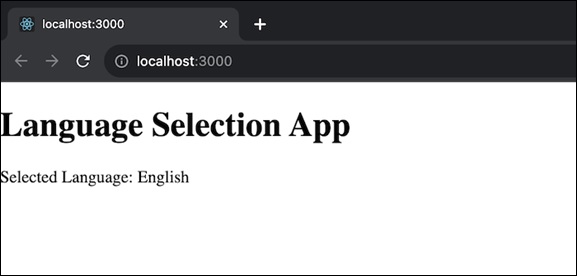
因此,我們可以看到上面顯示的輸出,其中所選語言為英語。因此,我們可以根據使用者的需要更改語言。
示例 - 使用 static contextType 的類元件
static contextType 屬性可用於在類元件中獲取上下文。我們可以使用一個按鈕建立一個簡單的示例,這樣我們就可以在亮色和暗色主題之間切換,從而允許我們動態更改主題。
import React, { Component } from 'react';

// Create a context
const ThemeContext = React.createContext();
class App extends Component {
   constructor(props) {
      super(props);
      this.state = {
         theme: 'light', // Initial theme is light
      };
   }
   toggleTheme = () => {
      // Update the context value
      this.setState((prevState) => ({
         theme: prevState.theme === 'light' ? 'dark' : 'light',
      }));
   };
   render() {
      return (
         <ThemeContext.Provider value={this.state.theme}>
         <div>
            <Button onClick={this.toggleTheme}>Toggle Theme</Button>
         </div>
         </ThemeContext.Provider>
      );
   }
}
class Button extends Component {

   // Specify the context
   static contextType = ThemeContext;

   render() {
      // Access the context value
      const theme = this.context;
      const className = 'button-' + theme;

      return (
         <button className={className} onClick={this.props.onClick}>
            {this.props.children}
         </button>
      );
   }
}

export default App;
當我們點選“切換主題”按鈕時,主題將在亮色和暗色之間動態切換,按鈕的樣式也會相應更改。
總結
static contextType 屬性是在 React 類元件中使用上下文的一種簡單方法,因為它提供了一種簡單的方法來獲取上下文資訊。如果我們的元件需要,我們可以透過宣告上下文來減少程式碼量。使用 static contextType,我們可以更輕鬆地維護全域性狀態並在應用程式中交換資料。