
- Behave 教程
- Behave - 首頁
- Behave - 簡介
- Behave - 安裝
- Behave - 命令列
- Behave - 配置檔案
- Behave - 特性測試設定
- Behave - Gherkin 關鍵字
- Behave - 特性檔案
- Behave - 步驟實現
- Behave - 初級步驟
- Behave - 支援的語言
- Behave - 步驟引數
- Behave - 場景大綱
- Behave - 多行文字
- Behave - 設定表
- Behave - 步驟中的步驟
- Behave - 背景
- Behave - 資料型別
- Behave - 標籤
- Behave - 列舉
- Behave - 步驟匹配器
- Behave - 正則表示式
- Behave - 可選部分
- Behave - 多方法
- Behave - 步驟函式
- Behave - 步驟引數
- Behave - 執行指令碼
- Behave - 排除測試
- Behave - 重試機制
- Behave - 報告
- Behave - 鉤子
- Behave - 除錯
- Behave 有用資源
- Behave - 快速指南
- Behave - 有用資源
- Behave - 討論
Behave - 步驟匹配器
Behave 中有三種類型的步驟匹配器。它們解釋如下:
ParseMatcher (parse) - 基於 parse 模組。
extended ParseMatcher (cfparse) - 允許基數語法。
RegexMatcher (re) - 基於正則表示式進行模式匹配。
Parse 匹配器
這是內建的步驟匹配器,具有以下特性:
簡單易用和理解。
預定義和使用者定義的資料型別支援此匹配器。
藉助資料型別重新利用正則表示式。
隱藏正則表示式的複雜性。
擴充套件的 Parse 匹配器
它擴充套件了 Parse 匹配器。除了 Parse 匹配器的功能外,它還具有其他功能。
附加功能包括:
理解基數字段語法。
為具有基數字段部分的欄位生成缺失的型別轉換器。
基於 parse-type。
Regex 匹配器
它具有以下特性:
向後相容 Cucumber。
比 parse 匹配器更容易使用。
讓我們詳細瞭解 parse 匹配器。
Parse 匹配器
特性檔案中可能存在具有幾乎相似短語的步驟。Behave 具有解析能力。為此使用use_step_parser方法,我們必須將解析器型別作為引數傳遞給該方法。
對於 parse 匹配器,我們必須傳遞引數 parse。它利用 parse 進行正則表示式解析和匹配。
特性檔案(幾乎相同的 Given 步驟)
相似步驟的特性檔案如下:
Feature − Payment Process
Scenario − Check Debit transactions
      Given user is on "debit" screen
      When user makes a payment
Scenario − Check Credit transactions
      Given user is on "credit" screen
相應的步驟實現檔案
步驟實現檔案如下:
from behave import *
#define parser type
use_step_matcher("parse")
@given('user is on "{p}" screen')
def step_impl(context, p):
   print(p)
@when('user makes a payment')
def step_pay_complete(context):
   pass
輸出
執行特性檔案後獲得的輸出如下所示。這裡,我們使用了命令behave --no-capture -f plain。
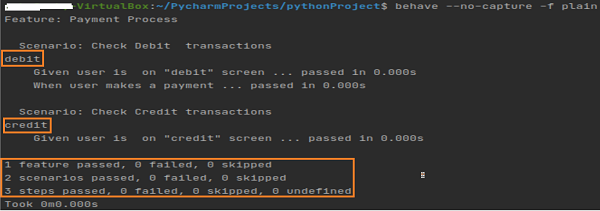
輸出顯示debit和credit。這兩個值已透過特性檔案中幾乎相同的 Given 步驟傳遞。在步驟實現中,我們已解析這兩個步驟。
廣告