
 資料結構
資料結構 網路
網路 關係資料庫管理系統(RDBMS)
 作業系統
作業系統 Java
Java MS Excel
 iOS
iOS HTML
HTML CSS
CSS Android
 Python
 C語言程式設計
 C++
C++ C#
C# MongoDB
 MySQL
MySQL Javascript
 PHP
PHP 物理學
物理學 化學
化學 生物學
生物學 數學
數學 英語
英語 經濟學
經濟學 心理學
心理學 社會學
社會學 服裝學
服裝學 法學
法學C++二叉樹中非葉子節點的計數
給定一個二叉樹,任務是計算二叉樹中非葉子節點的數量。
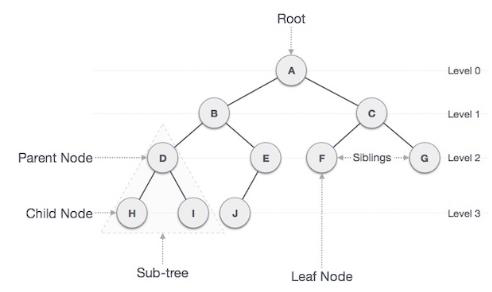
二叉樹是一種用於資料儲存的特殊資料結構。二叉樹有一個特殊條件,即每個節點最多可以有兩個子節點。二叉樹結合了有序陣列和連結串列的優點,搜尋速度像排序陣列一樣快,插入或刪除操作像連結串列一樣快。非葉子節點也稱為父節點,因為它們具有多於0個子節點且少於2個子節點。
二叉樹的結構如下所示:
例如
輸入:
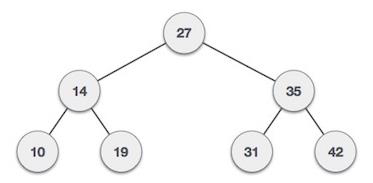
輸出:非葉子節點數量為:3
解釋:在給定的樹中,27、14和35是非葉子節點,因為它們具有多於0個子節點且少於2個子節點。
下面程式中使用的演算法如下:
建立二叉樹結構,包含指向左節點的指標、指向右節點的指標以及儲存在節點中的資料部分。
建立一個函式,每當呼叫此函式時都會插入一個節點。為此,將資料插入新節點,並將新節點的左右指標設定為NULL,然後返回該節點。
建立一個遞迴函式,用於計算二叉樹中非葉子節點的數量。
- 檢查根節點是否為NULL,或者根節點的左子節點和右子節點是否為NULL,如果是,則返回0。
- 返回1 + 對此函式的遞迴呼叫(使用左指標)+ 對此函式的遞迴呼叫(使用右指標)。
列印計數。
示例
#include <iostream>
using namespace std;
// Node's structure
struct Node {
   int data;
   struct Node* left;
   struct Node* right;
};
// To define the new node
struct Node* newNode(int data){
   struct Node* node = new Node;
   node->data = data;
   node->left = node->right = NULL;
   return (node);
}
// Count the non leaf nodes.
int nonleaf(struct Node* root){
   if (root == NULL || (root->left == NULL && root->right == NULL)){
      return 0;
   }
   return 1 + nonleaf(root->left) + nonleaf(root->right);
}
// Main function
int main(){
   struct Node* root = newNode(10);
   root->left = newNode(21);
   root->right = newNode(33);
   root->left->left = newNode(48);
   root->left->right = newNode(51);
   cout << nonleaf(root);
   return 0;
}
輸出
如果執行以上程式碼,將生成以下輸出:
count of non-leaf nodes is: 2

更新於:2020年5月15日
2K+ 次瀏覽

廣告