
 資料結構
資料結構 網路
網路 關係資料庫管理系統 (RDBMS)
 作業系統
作業系統 Java
Java MS Excel
 iOS
iOS HTML
HTML CSS
CSS Android
 Python
 C語言程式設計
 C++
C++ C#
C# MongoDB
 MySQL
MySQL Javascript
 PHP
PHP 物理學
物理學 化學
化學 生物學
生物學 數學
數學 英語
英語 經濟學
經濟學 心理學
心理學 社會學
社會學 時尚研究
時尚研究 法學研究
法學研究C++中二叉樹完整節點計數(迭代和遞迴)
給定一個二叉樹,任務是使用迭代和遞迴方法計算二叉樹中完整節點的數量。完整節點是指同時具有左右兩個子節點,且子節點均不為空的節點。請注意,在完整節點中,我們只考慮恰好有兩個子節點的節點。
二叉樹是一種用於資料儲存的特殊資料結構。二叉樹有一個特殊條件,即每個節點最多可以有兩個子節點。二叉樹結合了有序陣列和連結串列的優點,搜尋速度與排序陣列一樣快,插入或刪除操作速度與連結串列一樣快。非葉子節點也稱為父節點,因為它們有超過0個子節點,但少於兩個子節點。
二叉樹的結構如下所示:
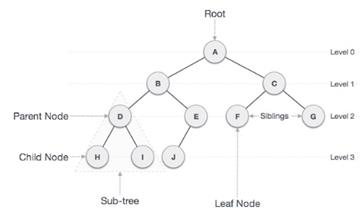
例如
輸入:
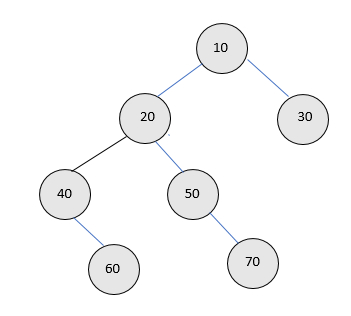
輸出:計數為2
解釋:在給定的樹中,有2個節點(即10和20)恰好有兩個子節點或完整節點,其他節點只有一個子節點或沒有子節點。
迭代法
下面程式中使用的方法如下:
建立一個包含資料部分、左指標和右指標的節點結構。
建立一個函式,用於將節點插入二叉樹。
建立一個函式來計算完整節點。
在函式內部,檢查IF !node,則返回,因為樹中沒有節點。
宣告一個臨時變數count來儲存完整節點的數量
建立一個佇列型別變數,例如qu
將節點壓入佇列中,例如qu.push(node)
迴圈,直到!qu.empty()
建立一個臨時變數,例如Node型別的temp,並將其初始化為queue.front()
使用qu.pop()彈出元素
檢查IF (!temp->left AND temp->right),則將count加1
檢查IF (temp->left != NULL),則執行qu.push(temp->left)
檢查IF (temp->right != NULL),則qu.push(temp->right)
返回count
列印結果。
示例
// Iterative program to count full nodes
#include <iostream>
#include <queue>
using namespace std;
struct Node{
   int data;
   struct Node* left, *right;
};
// Function to count the full Nodes in a binary tree
int fullcount(struct Node* node){
   // Check if tree is empty
   if (!node){
      return 0;
   }
   queue<Node *> myqueue;
   // traverse using level order traversing
   int result = 0;
   myqueue.push(node);
   while (!myqueue.empty()){
      struct Node *temp = myqueue.front();
      myqueue.pop();
      if (temp->left && temp->right){
         result++;
      }
      if (temp->left != NULL){
         myqueue.push(temp->left);
      }
      if (temp->right != NULL){
         myqueue.push(temp->right);
      }
   }
   return result;
}
struct Node* newNode(int data){
   struct Node* node = new Node;
   node->data = data;
   node->left = node->right = NULL;
   return (node);
}
int main(void){
   struct Node *root = newNode(10);
   root->left = newNode(20);
   root->right = newNode(30);
   root->left->left = newNode(40);
   root->left->right = newNode(50);
   root->left->left->right = newNode(60);
   root->left->right->right = newNode(70);
   cout <<"count is: "<<fullcount(root);
   return 0;
}
輸出
如果執行上述程式碼,我們將得到以下輸出:
count is: 2
遞迴法
下面程式中使用的方法如下:
建立一個包含資料部分、左指標和右指標的節點結構。
建立一個函式,用於將節點插入二叉樹。
建立一個函式來計算完整節點。
在函式內部,檢查IF !node,則返回,因為樹中沒有節點。
宣告一個臨時變數count來儲存完整節點的數量
檢查IF (root->left AND root->right),則將count加1
設定count = count + 遞迴呼叫此函式(root->left) + 遞迴呼叫此函式(root->right)
返回count
列印結果。
示例
// Recursive program to count full nodes
#include <iostream>
using namespace std;
struct Node{
   int data;
   struct Node* left, *right;
};
// Function to get the count of full Nodes
int fullcount(struct Node* root){
   if (root == NULL){
      return 0;
   }
   int result = 0;
   if (root->left && root->right){
      result++;
   }
   result += (fullcount(root->left) +
   fullcount(root->right));
   return result;
}
struct Node* newNode(int data){
   struct Node* node = new Node;
   node->data = data;
   node->left = node->right = NULL;
   return (node);
}
int main(){
   struct Node *root = newNode(10);
   root->left = newNode(20);
   root->right = newNode(30);
   root->left->left = newNode(40);
   root->left->right = newNode(50);
   root->left->left->right = newNode(60);
   root->left->right->right = newNode(70);
   cout <<"count is: "<<fullcount(root);
   return 0;
}
輸出
如果執行上述程式碼,我們將得到以下輸出:
count is: 2

1K+瀏覽量
