
- Erlang 教程
- Erlang - 首頁
- Erlang - 概述
- Erlang - 環境
- Erlang - 基本語法
- Erlang - Shell
- Erlang - 資料型別
- Erlang - 變數
- Erlang - 運算子
- Erlang - 迴圈
- Erlang - 決策
- Erlang - 函式
- Erlang - 模組
- Erlang - 遞迴
- Erlang - 數字
- Erlang - 字串
- Erlang - 列表
- Erlang - 檔案I/O
- Erlang - 原子
- Erlang - Map
- Erlang - 元組
- Erlang - 記錄
- Erlang - 異常
- Erlang - 宏
- Erlang - 標頭檔案
- Erlang - 預處理器
- Erlang - 模式匹配
- Erlang - 保護條件
- Erlang - BIFS
- Erlang - 二進位制
- Erlang - Fun
- Erlang - 程序
- Erlang - 郵件
- Erlang - 資料庫
- Erlang - 埠
- Erlang - 分散式程式設計
- Erlang - OTP
- Erlang - 併發
- Erlang - 效能
- Erlang - 驅動程式
- Erlang - Web程式設計
- Erlang 有用資源
- Erlang - 快速指南
- Erlang - 有用資源
- Erlang - 討論
Erlang - 多表達式
if 表示式也允許同時評估多個表示式。Erlang 中此語句的通用形式如下程式所示:
語法
if
condition1 ->
   statement#1;
condition2 ->
   statement#2;
conditionN ->
   statement#N;
true ->
   defaultstatement
end.
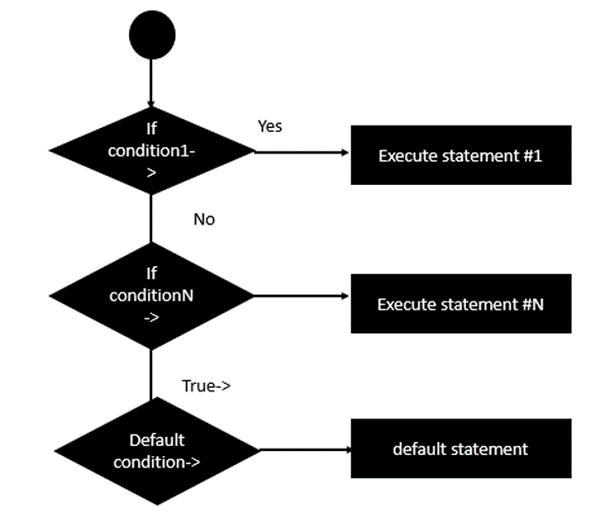
在 Erlang 中,條件是一個表示式,它計算結果為真或假。如果條件為真,則執行 statement#1。否則,評估下一個條件,依此類推。如果沒有評估結果為真,則評估defaultstatement。
下圖是上述語句的一般示意圖。
以下程式是 Erlang 中簡單if 表示式的示例:
示例
-module(helloworld).
-export([start/0]).

start() ->
   A = 5,
   B = 6,
   if
      A == B ->
         io:fwrite("A is equal to B");
      A < B ->
         io:fwrite("A is less than B");
      true ->
         io:fwrite("False")
   end.
關於上述程式,需要注意以下幾點:
這裡使用的表示式是變數 A 和 B 之間的比較。
->運算子需要跟在表示式後面。;需要跟在 statement#1 後面。->運算子需要跟在真表示式後面。需要使用語句“end”來表示 if 塊的結束。
上述程式的輸出將為:
輸出
A is less than B
erlang_decision_making.htm
廣告