- ASP.NET Core 教程
- ASP.NET Core - 首頁
- ASP.NET Core - 概述
- ASP.NET Core - 環境設定
- ASP.NET Core - 新建專案
- ASP.NET Core - 專案佈局
- ASP.NET Core - Project.Json
- ASP.NET Core - 配置
- ASP.NET Core - 中介軟體
- ASP.NET Core - 異常處理
- ASP.NET Core - 靜態檔案
- ASP.NET Core - 設定 MVC
- ASP.NET Core - MVC 設計模式
- ASP.NET Core - 路由
- ASP.NET Core - 屬性路由
- ASP.NET Core - 操作結果
- ASP.NET Core - 檢視
- 設定 Entity Framework
- ASP.NET Core - DBContext
- ASP.NET Core - Razor 佈局檢視
- ASP.NET Core - Razor 檢視啟動
- ASP.NET Core - Razor 檢視匯入
- ASP.NET Core - Razor 標籤助手
- ASP.NET Core - Razor 編輯表單
- ASP.NET Core - 身份概述
- ASP.NET Core - 授權屬性
- 身份配置
- ASP.NET Core - 身份遷移
- ASP.NET Core - 使用者註冊
- ASP.NET Core - 建立使用者
- ASP.NET Core - 登入和登出
- ASP.NET Core 有用資源
- ASP.NET Core - 快速指南
- ASP.NET Core - 有用資源
- ASP.NET Core - 討論
ASP.NET Core - 設定 MVC
在本章中,我們將設定 FirstAppDemo 應用程式中的 MVC 框架。我們將透過構建一個基於 ASP.NET Core 的 Web 應用程式,更具體地說,是基於 ASP.NET Core MVC 框架的 Web 應用程式來進行。從技術上講,我們只使用中介軟體就可以構建整個應用程式,但是 ASP.NET Core MVC 為我們提供了可以輕鬆建立 HTML 頁面和基於 HTTP 的 API 的功能。
要在我們的空專案中設定 MVC 框架,請按照以下步驟操作:
安裝 **Microsoft.AspNet.Mvc** 包,它使我們能夠訪問框架提供的程式集和類。
安裝完程式包後,我們需要在執行時註冊 ASP.NET MVC 所需的所有服務。我們將在 **ConfigureServices** 方法中執行此操作。
最後,我們需要新增 ASP.NET MVC 的中介軟體來接收請求。從本質上講,這部分中介軟體接收 HTTP 請求並嘗試將該請求定向到我們將編寫的 C# 類。
**步驟 1** - 讓我們透過右鍵單擊“管理 NuGet 程式包”來進入 NuGet 程式包管理器。安裝 Microsoft.AspNet.Mvc 包,它使我們能夠訪問框架提供的程式集和類。
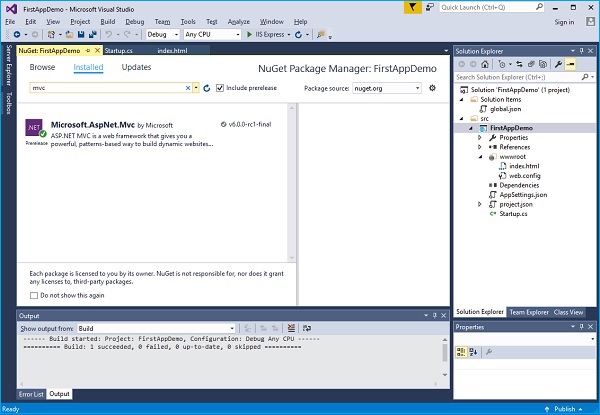
**步驟 2** - 安裝 Microsoft.AspNet.Mvc 包後,我們需要在執行時註冊 ASP.NET Core MVC 所需的所有服務。我們將使用 ConfigureServices 方法來執行此操作。我們還將新增一個簡單的控制器,並檢視該控制器的一些輸出。
讓我們為此專案新增一個新資料夾,並將其命名為 **Controllers**。我們可以在此資料夾中放置多個控制器,如下面的解決方案資源管理器所示。
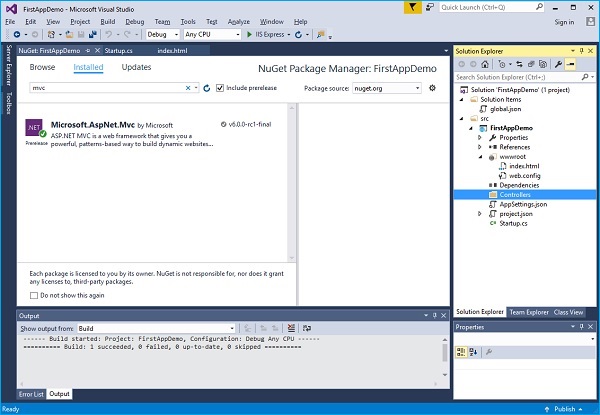
現在右鍵單擊 Controllers 資料夾,然後選擇 **新增 → 類** 選單選項。
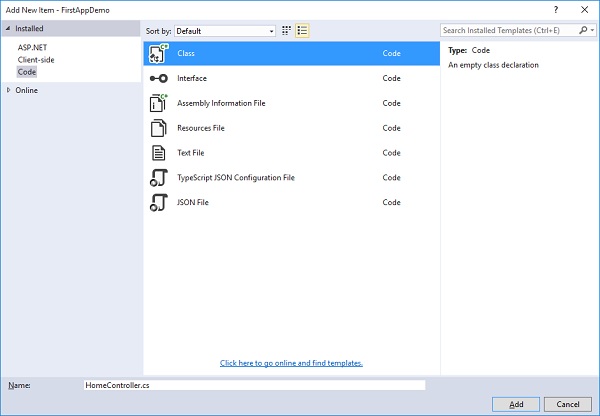
**步驟 3** - 在這裡,我們想要新增一個簡單的 **C#** 類,並將此類命名為 **HomeController**,然後單擊“新增”按鈕,如上面的螢幕截圖所示。
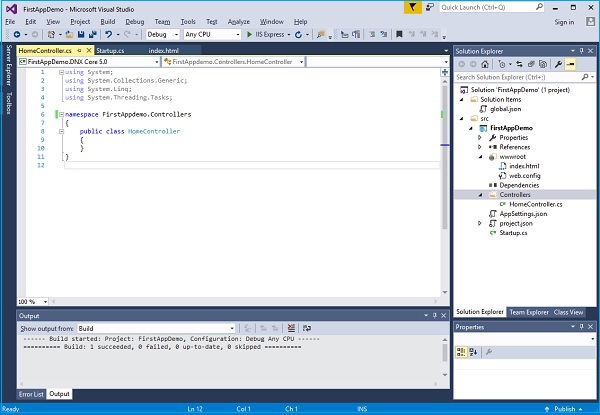
這將是我們的預設頁面。
**步驟 4** - 讓我們定義一個返回字串的公共方法,並將該方法命名為 Index,如以下程式所示。
using System;
using System.Collections.Generic;
using System.Linq;
using System.Threading.Tasks;

namespace FirstAppdemo.Controllers {
   public class HomeController {
      public string Index() {
         return "Hello, World! this message is from Home Controller...";
      }
   }
}
**步驟 5** - 當您轉到網站的根目錄時,您希望看到控制器響應。目前,我們將提供 index.html 檔案。
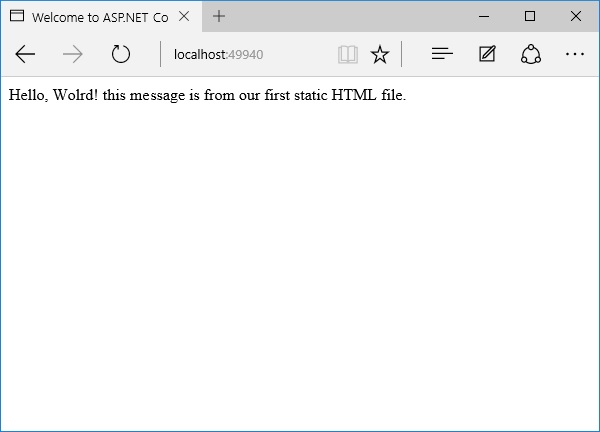
讓我們進入網站的根目錄並刪除 index.html。我們希望控制器響應而不是 **index.html** 檔案。
**步驟 6** - 現在轉到 Startup 類中的 Configure 方法,並新增 **UseMvcWithDefaultRoute** 中介軟體。
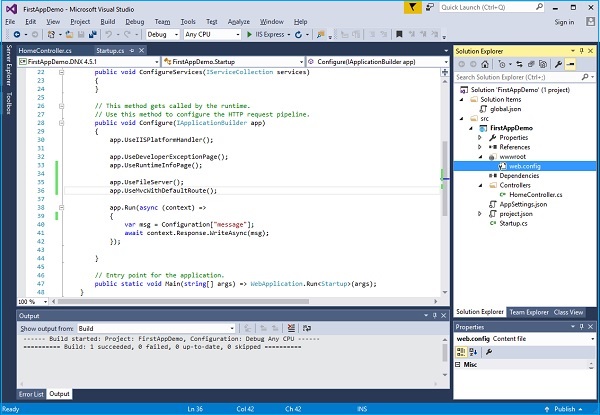
**步驟 7** - 現在重新整理網站根目錄處的應用程式。
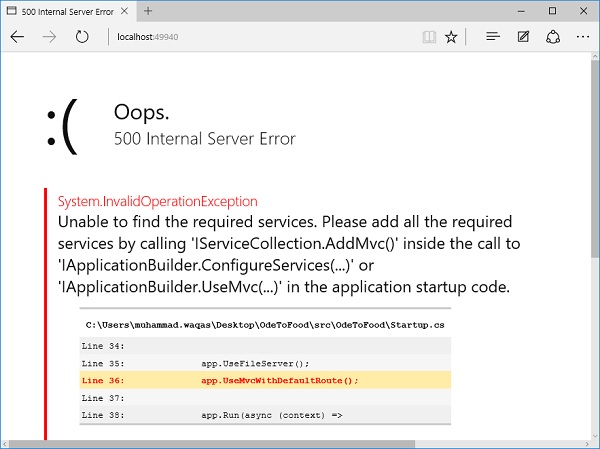
您將遇到 500 錯誤。錯誤指出框架無法找到所需的 ASP.NET Core MVC 服務。
ASP.NET Core 框架本身由具有非常集中職責的不同小型元件組成。
例如,有一個元件必須定位並例項化控制器。
該元件需要位於 ASP.NET Core MVC 正確執行的服務集合中。
**步驟 8** - 除了新增 NuGet 包和中介軟體外,我們還需要在 ConfigureServices 中新增 AddMvc 服務。以下是 Startup 類的完整實現。
using Microsoft.AspNet.Builder;
using Microsoft.AspNet.Hosting;
using Microsoft.AspNet.Http;

using Microsoft.Extensions.DependencyInjection;
using Microsoft.Extensions.Configuration;

namespace FirstAppDemo {
   public class Startup {
      public Startup() {
         var builder = new ConfigurationBuilder() .AddJsonFile("AppSettings.json");
         Configuration = builder.Build();
      }
      public IConfiguration Configuration { get; set; }

      // This method gets called by the runtime.
      // Use this method to add services to the container.
      // For more information on how to configure your application,
      // visit http://go.microsoft.com/fwlink/?LinkID=398940
      public void ConfigureServices(IServiceCollection services) {
         services.AddMvc();
      }

      // This method gets called by the runtime.
      // Use this method to configure the HTTP request pipeline.
      public void Configure(IApplicationBuilder app) {
         app.UseIISPlatformHandler();

         app.UseDeveloperExceptionPage();
         app.UseRuntimeInfoPage();

         app.UseFileServer();
         app.UseMvcWithDefaultRoute();

         app.Run(async (context) => {
            var msg = Configuration["message"];
            await context.Response.WriteAsync(msg);
         });
      }

      // Entry point for the application.
      public static void Main(string[] args) => WebApplication.Run<Startup>(args);
   }
}
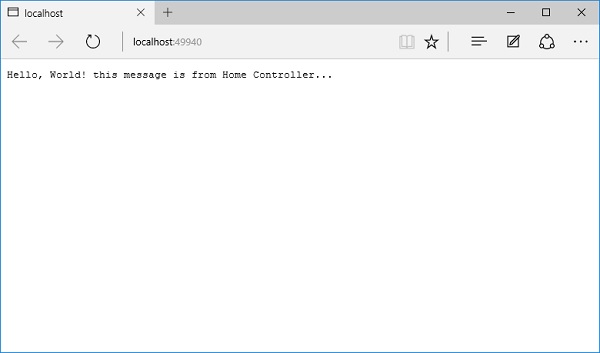
**步驟 9** - 儲存 **Startup.cs** 檔案,然後轉到瀏覽器並重新整理它。您現在將收到來自我們的 **home 控制器** 的響應。