
 資料結構
資料結構 網路
網路 關係資料庫管理系統
 作業系統
作業系統 Java
Java MS Excel
 iOS
iOS HTML
HTML CSS
CSS Android
 Python
 C 程式設計
 C++
C++ C#
C# MongoDB
 MySQL
MySQL Javascript
 PHP
PHP 物理學
物理學 化學
化學 生物學
生物學 數學
數學 英語
英語 經濟學
經濟學 心理學
心理學 社會學
社會學 時尚研究
時尚研究 法律研究
法律研究如何在 OpenCV Python 中找到影像輪廓的邊界矩形?
物體的邊界矩形是在影像中圍繞物體繪製的矩形。在OpenCV中有兩種方法可以找到邊界矩形 -
直邊界矩形
它是一個直線矩形,因為它不考慮物體的旋轉。可以使用函式cv2.boundingRect()計算。其語法如下 -
x,y,w,h = cv2.boundingRect(cnt)
img = cv2.rectangle(img,(x,y),(x+w,y+h),(0,255,0),2)
這裡,“cnt”是輪廓點的陣列。它返回邊界矩形的左上角座標(x,y)以及寬度和高度(w,h)。
旋轉矩形
它考慮了物體的旋轉,並繪製一個面積最小的矩形。旋轉矩形是使用函式cv2.minAreaRect()找到的。它返回左上角座標(x,y),(width,height),旋轉角度。矩形的4個角可以使用函式cv2.boxPoints()獲得。
rect = cv2.minAreaRect(cnt)
box = cv2.boxPoints(rect)
box = np.int0(box)
img = cv2.drawContours(img,[box],0,(0,255,255),2)
步驟
您可以使用以下步驟來計算給定函式的雅可比矩陣 -
匯入所需的庫。所需的庫是OpenCV和NumPy。
載入輸入影像。將輸入影像轉換為灰度影像。
對灰度影像應用閾值處理以建立二值影像。
找到影像中物體的輪廓。
使用上述輪廓計算直邊界矩形。在影像上繪製矩形。
計算旋轉邊界矩形並在影像上繪製它。
顯示帶有繪製的直線和旋轉邊界矩形的影像。
我們將在以下示例中使用以下影像作為輸入檔案。

示例 1
在下面的 Python 程式碼中,我們計算直邊界矩形。
# import required libraries
import cv2

# read the input image
img = cv2.imread('approx.png')

# convert the image to grayscale
gray = cv2.cvtColor(img, cv2.COLOR_BGR2GRAY)

# apply thresholding on the gray image to create a binary image
ret,thresh = cv2.threshold(gray,127,255,0)

# find the contours
contours, _ = cv2.findContours(thresh,cv2.RETR_TREE,cv2.CHAIN_APPROX_SIMPLE)

# take the first contour
cnt = contours[0]

# compute the bounding rectangle of the contour
x,y,w,h = cv2.boundingRect(cnt)

# draw contour
img = cv2.drawContours(img,[cnt],0,(0,255,255),2)

# draw the bounding rectangle
img = cv2.rectangle(img,(x,y),(x+w,y+h),(0,255,0),2)

# display the image with bounding rectangle drawn on it
cv2.imshow("Bounding Rectangle", img)
cv2.waitKey(0)
cv2.destroyAllWindows()
輸出
執行上述程式碼時,它將生成以下輸出視窗。
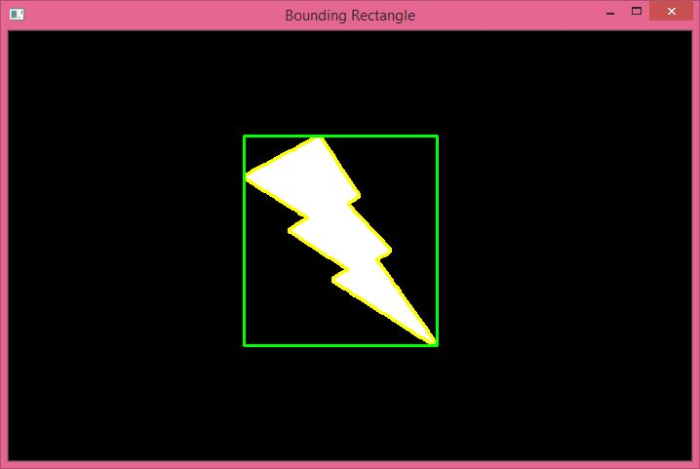
在上面的輸出中,綠色矩形顯示直邊界矩形。
現在,讓我們計算包含最小面積的旋轉邊界矩形。請參閱以下示例。
示例 2
在下面的 Python 程式碼中,我們計算直邊界矩形和旋轉邊界矩形。比較輸出視窗以清楚地瞭解兩種邊界矩形之間的區別。
import cv2
import numpy as np

img = cv2.imread('approx.png')
img1 = cv2.cvtColor(img, cv2.COLOR_BGR2GRAY)

ret,thresh = cv2.threshold(img1,127,255,0)
contours,_ = cv2.findContours(thresh, cv2.RETR_TREE,cv2.CHAIN_APPROX_SIMPLE)

# print("Number of contours detected:", len(contours))
cnt = contours[0]

# compute straight bounding rectangle
x,y,w,h = cv2.boundingRect(cnt)
img = cv2.drawContours(img,[cnt],0,(255,255,0),2)
img = cv2.rectangle(img,(x,y),(x+w,y+h),(0,255,0),2)

# compute rotated rectangle (minimum area)
rect = cv2.minAreaRect(cnt)
box = cv2.boxPoints(rect)
box = np.int0(box)

# draw minimum area rectangle (rotated rectangle)
img = cv2.drawContours(img,[box],0,(0,255,255),2)
cv2.imshow("Bounding Rectangles", img)
cv2.waitKey(0)
cv2.destroyAllWindows()
輸出
執行上述程式碼時,它將生成以下輸出視窗。
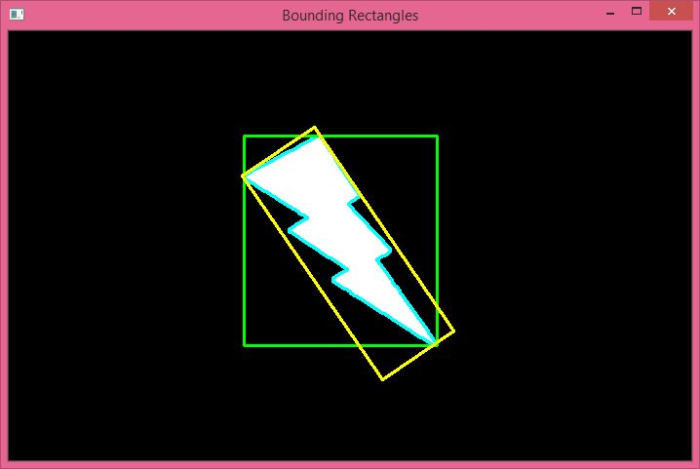
在上面的輸出中,綠色矩形是直邊界矩形,黃色矩形是最小面積的旋轉矩形。注意這兩個矩形之間的區別。

更新於: 2023年8月28日
27K+ 次檢視

廣告