
 資料結構
資料結構 網路
網路 關係資料庫管理系統
 作業系統
作業系統 Java
Java MS Excel
 iOS
iOS HTML
HTML CSS
CSS Android
 Python
 C 程式設計
 C++
C++ C#
C# MongoDB
 MySQL
MySQL Javascript
 PHP
PHP 物理學
物理學 化學
化學 生物學
生物學 數學
數學 英語
英語 經濟學
經濟學 心理學
心理學 社會學
社會學 服裝設計
服裝設計 法律學
法律學如何在Android中使用執行時許可權將影像檔案寫入外部儲存?
此示例演示瞭如何在Android中使用執行時許可權將影像檔案寫入外部儲存。
步驟 1 - 在Android Studio中建立一個新專案,轉到檔案 ⇒ 新建專案,並填寫所有必需的詳細資訊以建立新專案。
步驟 2 - 將以下程式碼新增到res/layout/activity_main.xml。
<?xml version = "1.0" encoding = "utf-8"?>
<LinearLayout xmlns:android = "http://schemas.android.com/apk/res/android"
   xmlns:tools = "http://schemas.android.com/tools"
   android:layout_width = "match_parent"
   android:layout_height = "match_parent"
   tools:context = ".MainActivity"
   android:orientation = "vertical">
   <Button
      android:id = "@+id/save"
      android:text = "save"
      android:layout_width = "wrap_content"
      android:layout_height = "wrap_content" />
</LinearLayout>
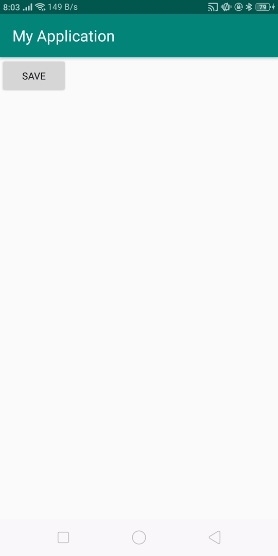
在上面的程式碼中,我們添加了一個按鈕。當用戶點選按鈕時,它將資料儲存到外部儲存中。
步驟 3 - 將以下程式碼新增到src/MainActivity.java
package com.example.andy.myapplication;

import android.annotation.TargetApi;
import android.content.pm.PackageManager;
import android.graphics.Bitmap;
import android.graphics.Canvas;
import android.graphics.drawable.BitmapDrawable;
import android.graphics.drawable.Drawable;
import android.os.Build;
import android.os.Bundle;
import android.os.Environment;
import android.support.annotation.NonNull;
import android.support.v4.app.ActivityCompat;
import android.support.v4.content.ContextCompat;
import android.support.v7.app.AppCompatActivity;
import android.util.Log;
import android.view.View;
import android.widget.Button;
import android.widget.ImageView;
import android.widget.Toast;

import java.io.File;
import java.io.FileOutputStream;

public class MainActivity extends AppCompatActivity {
   private static final int PERMISSION_REQUEST_CODE = 100;
   Button save;
   Bitmap bitmap;
   @Override
   protected void onCreate(Bundle savedInstanceState) {
      super.onCreate(savedInstanceState);
      setContentView(R.layout.activity_main);
      Drawable drawable = getResources().getDrawable(R.drawable.mario);
      bitmap = ((BitmapDrawable)drawable).getBitmap();
      save = findViewById(R.id.save);
      save.setOnClickListener(new View.OnClickListener() {
         @Override
         public void onClick(View v) {
            String state = Environment.getExternalStorageState();
            if (Environment.MEDIA_MOUNTED.equals(state)) {
               if (Build.VERSION.SDK_INT > = 23) {
                  if (checkPermission()) {
                     String path = Environment.getExternalStorageDirectory().toString();
                     File file = new File(path, "UniqueFileName"+".jpg");
                     if (!file.exists()) {
                        Log.d("path", file.toString());
                        try {
                           FileOutputStream fos = new FileOutputStream(file);
                           bitmap.compress(Bitmap.CompressFormat.JPEG, 100, fos);
                           fos.flush();
                           fos.close();
                        } catch (Exception e) {
                           e.printStackTrace();
                        }
                     }
                  } else {
                     requestPermission(); // Code for permission
                  }
               } else {
                  String path = Environment.getExternalStorageDirectory().toString();
                  File file = new File(path, "UniqueFileName"+".jpg");
                  if (!file.exists()) {
                     Log.d("path", file.toString());
                     FileOutputStream fos = null;
                     try {
                        fos = new FileOutputStream(file);
                        bitmap.compress(Bitmap.CompressFormat.JPEG, 100, fos);
                        fos.flush();
                        fos.close();
                     } catch (java.io.IOException e) {
                        e.printStackTrace();
                     }
                  }
               }
            }
         }
      });
   }

   private boolean checkPermission() {
      int result = ContextCompat.checkSelfPermission(MainActivity.this, android.Manifest.permission.WRITE_EXTERNAL_STORAGE);
      if (result = = PackageManager.PERMISSION_GRANTED) {
         return true;
      } else {
         return false;
      }
   }

   private void requestPermission() {
      if (ActivityCompat.shouldShowRequestPermissionRationale(MainActivity.this, android.Manifest.permission.WRITE_EXTERNAL_STORAGE)) {
         Toast.makeText(MainActivity.this, "Write External Storage permission allows us to save files. Please allow this permission in App Settings.", Toast.LENGTH_LONG).show();
      } else {
         ActivityCompat.requestPermissions(MainActivity.this, new String[]{android.Manifest.permission.WRITE_EXTERNAL_STORAGE}, PERMISSION_REQUEST_CODE);
      }
   }

   @Override
   public void onRequestPermissionsResult(int requestCode, String permissions[], int[] grantResults) {
      switch (requestCode) {
         case PERMISSION_REQUEST_CODE:
          if (grantResults.length > 0 && grantResults[0] = = PackageManager.PERMISSION_GRANTED) {
            Log.e("value", "Permission Granted, Now you can use local drive .");
          } else {
            Log.e("value", "Permission Denied, You cannot use local drive .");
          }
          break;
      }
   }
}
步驟 4 - 將以下程式碼新增到manifest.xml
<?xml version = "1.0" encoding = "utf-8"?>
<manifest xmlns:android = "http://schemas.android.com/apk/res/android"
   package = "com.example.andy.myapplication">
   <uses-permission android:name = "android.permission.WRITE_EXTERNAL_STORAGE"/>
   <uses-permission android:name = "android.permission.READ_EXTERNAL_STORAGE"/>
   <application
      android:allowBackup = "true"
      android:icon = "@mipmap/ic_launcher"
      android:label = "@string/app_name"
      android:roundIcon = "@mipmap/ic_launcher_round"
      android:supportsRtl = "true"
      android:theme = "@style/AppTheme">
     <activity android:name = ".MainActivity">
         <intent-filter>
            <action android:name = "android.intent.action.MAIN" />
            <category android:name = "android.intent.category.LAUNCHER" />
         </intent-filter>
      </activity>
   </application>
</manifest>
讓我們嘗試執行您的應用程式。我假設您已將您的實際Android移動裝置連線到您的計算機。要從Android Studio執行應用程式,請開啟您的專案中的一個活動檔案,然後點選執行  工具欄中的圖示。選擇您的移動裝置作為選項,然後檢查您的移動裝置,它將顯示您的預設螢幕 -
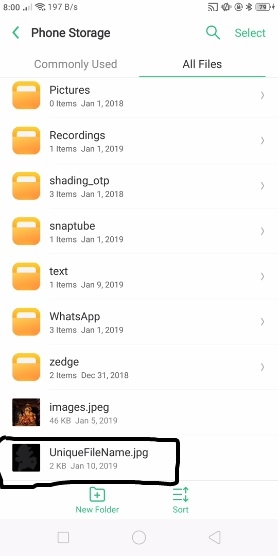
在上述結果中,點選儲存按鈕將影像儲存到外部儲存中,如下所示 -
點選 此處 下載專案程式碼

更新於: 2019年7月30日
1K+ 次瀏覽

廣告