
 資料結構
資料結構 網路
網路 關係資料庫管理系統 (RDBMS)
 作業系統
作業系統 Java
Java MS Excel
 iOS
iOS HTML
HTML CSS
CSS Android
 Python
 C語言程式設計
 C++
C++ C#
C# MongoDB
 MySQL
MySQL Javascript
 PHP
PHP 物理學
物理學 化學
化學 生物學
生物學 數學
數學 英語
英語 經濟學
經濟學 心理學
心理學 社會學
社會學 服裝設計
服裝設計 法律研究
法律研究C++ 中的異常處理機制如何工作?
在 C++ 中,異常處理是處理執行時錯誤的過程。異常是在 C++ 中執行時丟擲的事件。所有異常都派生自 std::exception 類。它是一個可以處理的執行時錯誤。如果我們不處理異常,它會列印異常訊息並終止程式。
異常在 C++ 標準中定義為 `
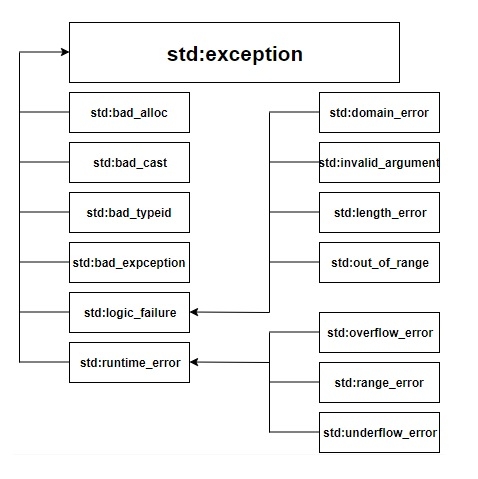
C++ 中常見的異常類:
| 序號 | 異常及描述 |
|---|---|
| 1 | std::exception 這是一個異常,也是所有標準 C++ 異常的父類。 |
| 2 | std::bad_cast 由 dynamic_cast 丟擲的異常。 |
| 3 | std::bad_exception 此異常用於處理 C++ 程式中的意外異常。 |
| 4 | std::bad_alloc 通常由 new 丟擲。 |
| 5 | std::logic_error 此異常可以透過閱讀程式碼來檢測。 |
| 6 | std::runtime_error 此異常無法透過閱讀程式碼來檢測。 |
| 7 | std::bad_typeid 由 typeid 丟擲的異常。 |
關鍵詞
異常處理中有 3 個關鍵詞:try、catch 和 throw。
Try/Catch 塊
在 C++ 中,異常處理使用 try/catch 語句執行。可能發生異常的程式碼放在 Try 塊中。Catch 塊用於處理異常。
示例程式碼
#include <iostream>
using namespace std;
class Sample1 {
   public:
      Sample1() {
         cout << "Construct an Object of sample1" << endl;
      }
      ~Sample1() {
         cout << "Destruct an Object of sample1" << endl;
      }
};
class Sample2 {
   public:
      Sample2() {
         int i=7;
         cout << "Construct an Object of sample2" << endl;
         throw i;
      }
      ~Sample2() {
         cout << "Destruct an Object of sample2" << endl;
      }
};
int main() {
   try {
      Sample1 s1;
      Sample2 s2;
   } catch(int i) {
         cout << "Caught " << i << endl;
   }
}
輸出
Construct an Object of sample1
Construct an Object of sample2
Destruct an Object of sample1
Caught 7
使用者自定義異常
我們可以透過繼承和重寫異常類的功能來定義我們自己的異常。
示例程式碼
#include <iostream>
#include <exception> using namespace std;
struct DivideByZero : public exception {
   const char * what () const throw () {
      return "My Exception";
   }
};
int main() {
   try {
      throw DivideByZero();
   } catch(DivideByZero& e) {
      cout << "Exception caught" << endl; cout << e.what() << endl;
   } catch(exception& e) {
   }
}
輸出
Exception caught My Exception
what() = A public method provided by exception class and it has been overridden by all the child exception classes. It returns the cause of an exception.

更新於:2019年7月30日
226 次瀏覽

廣告