
Go - if...else 語句
if 語句可以後跟一個可選的 else 語句,當布林表示式為假時執行該語句。
語法
在 Go 程式語言中,if...else 語句的語法為 -
if(boolean_expression) {
   /* statement(s) will execute if the boolean expression is true */
} else {
   /* statement(s) will execute if the boolean expression is false */
}
如果布林表示式求值為 true,那麼將執行if 程式碼塊,否則將執行else 程式碼塊。
流程圖
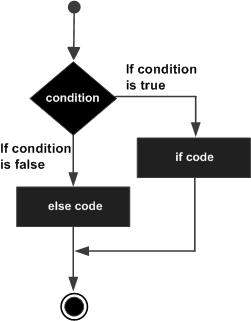
示例
package main

import "fmt"

func main() {
   /* local variable definition */
   var a int = 100;

   /* check the boolean condition */
   if( a < 20 ) {
      /* if condition is true then print the following */
      fmt.Printf("a is less than 20\n" );
   } else {
      /* if condition is false then print the following */
      fmt.Printf("a is not less than 20\n" );
   }
   fmt.Printf("value of a is : %d\n", a);
}
編譯並執行以上程式碼後,將生成以下結果 -
a is not less than 20;
value of a is : 100
if...else if...else 語句
if 語句可以後跟一個可選的 else if...else 語句,這對於使用一個 if...else if 語句測試各種條件非常有用。
在使用 if、else if 和 else 語句時,有幾點需要注意 -
一個 if 可以有 0 個或 1 個 else,並且它必須放在任何 else if 之後。
一個 if 可以有 0 到多個 else if,並且它們必須放在 else 之前。
一旦一個 else if 執行成功,就不會測試剩餘的任何 else if 或 else。
語法
在 Go 程式語言中,if...else if...else 語句的語法為 -
if(boolean_expression 1) {
   /* Executes when the boolean expression 1 is true */
} else if( boolean_expression 2) {
   /* Executes when the boolean expression 2 is true */
} else if( boolean_expression 3) {
   /* Executes when the boolean expression 3 is true */
} else {
   /* executes when the none of the above condition is true */
}
示例
package main

import "fmt"

func main() {
   /* local variable definition */
   var a int = 100

   /* check the boolean condition */
   if( a == 10 ) {
      /* if condition is true then print the following */
      fmt.Printf("Value of a is 10\n" )
   } else if( a == 20 ) {
      /* if else if condition is true */
      fmt.Printf("Value of a is 20\n" )
   } else if( a == 30 ) {
      /* if else if condition is true  */
      fmt.Printf("Value of a is 30\n" )
   } else {
      /* if none of the conditions is true */
      fmt.Printf("None of the values is matching\n" )
   }
   fmt.Printf("Exact value of a is: %d\n", a )
}
編譯並執行以上程式碼後,將生成以下結果 -
None of the values is matching
Exact value of a is: 100
go_decision_making.htm
廣告