
 資料結構
資料結構 網路
網路 關係資料庫管理系統 (RDBMS)
 作業系統
作業系統 Java
Java MS Excel
 iOS
iOS HTML
HTML CSS
CSS Android
 Python
 C 程式設計
 C++
C++ C#
C# MongoDB
 MySQL
MySQL Javascript
 PHP
PHP 物理
物理 化學
化學 生物
生物 數學
數學 英語
英語 經濟學
經濟學 心理學
心理學 社會學
社會學 服裝設計
服裝設計 法學
法學統計圖中鄰居節點之和最多為 K 的節點數量
介紹
無向圖是計算機科學和圖論中的一個重要組成部分,它表示由邊連線的頂點集合,且邊沒有方向性。與無向圖相關的常見問題之一是統計圖中鄰居節點之和最多為 K 的節點數量。在計算機科學中,圖論領域將處理給定矩陣中元素之間的連線。通常,圖由邊和節點組成。
統計圖中節點的數量
在這種情況下,使用的圖是無向圖。無向圖包含 'N' 個節點、'M' 條邊,需要滿足條件才能獲得最多為 K 的節點計數。下面給出一個包含四個節點的無向圖的常見示例:
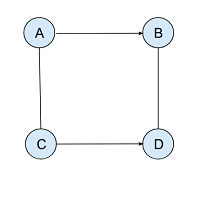
示例
鄰接矩陣作為輸入,其中包含四個頂點的值。
1 2
2 3
3 4
4 5
鄰居是來自節點左側或右側的節點。在上述情況下,節點 1 返回鄰居之和為 1,節點 2 返回鄰居之和為 2,節點 3 返回鄰居之和為 3,節點 4 返回鄰居之和為 2,最後節點 5 返回鄰居之和為 1。我們需要檢查節點的和,當鄰居之和小於或等於 K 時。因此,節點 1 是唯一滿足條件的節點,它返回的值為 1。
方法 1:使用遞迴函式計算圖中鄰居節點之和最多為 K 的節點數量的 C 程式碼
鄰接矩陣被初始化為輸入,為了遍歷列表,我們可以使用深度優先搜尋 (DFS) 或廣度優先搜尋 (BFS) 演算法。
演算法
步驟 1 − 將所需的標標頭檔案 stdio 和 stdlib 包含在給定的程式中。
步驟 2 − 使用三個引數定義函式:圖、N 和 K(int 資料型別)。
步驟 3 − 將計數變數初始化為 0,並使用 for 迴圈迭代圖的鄰接列表(從 1 到 N)。
步驟 4 − 邊連線兩個點 A 和 B,它是給定鄰接列表中的相鄰節點。
步驟 5 − 將 sum 變數儲存在名為“sum”的變數中,該變數對給定頂點中的權重或屬性的值求和。
步驟 6 − 檢查條件:如果 sum 值小於或等於 K,則將計數加一。
步驟 7 − 最終輸出包含圖中節點的數量,當鄰居節點之和最多為 K 時。
示例
//The header files are included
#include <stdio.h>
#include <stdlib.h>

// Function defined with three arguments and declared as output
int output(int** graph, int node, int edges) {
   //Initializing the variable as 0
   int val = 0;
   //for loop will iterate through the values
   for (int m = 1; m <= node; ++m) {
      int sum = 0;
      for (int neighbor = 1; neighbor <= node; ++neighbor) {
         sum += graph[m][neighbor];
      }
      //To check for the condition whether the sum value is less than or equal to edges
      if (sum <= edges) {
         //When equal it is incremented by one
         val++;
      }
   }

   return val;
}

// Main function to test the code
int main() {
   //Initializing the variables with values
   int node = 5, M = 4, edges = 2;

   int** graph = (int**)malloc((node+1)*sizeof(int*)); // Indexed from 1 to N

   for(int i=0; i<=node; ++i){
      graph[i] = (int*)malloc((node+1)*sizeof(int));
      for(int j=0; j<=node; ++j){
         graph[i][j] = 0;
      }
   }

   // The edges values are declared in the graph
   graph[1][2] = 1;
   graph[2][1] = 1;
   graph[2][3] = 1;
   graph[3][2] = 1;
   graph[3][4] = 1;
   graph[4][3] = 1;
   graph[4][5] = 1;
   graph[5][4] = 1;
   //The function is called recursively with the parameters
   int nodeCount = output(graph, node, edges);

   printf("The total number of nodes with a sum of neighbors less than or equal to %d:\n%d\n", edges, nodeCount);

   return 0;
}
輸出
The total number of nodes with a sum of neighbors less than or equal to 2:
5
結論
使用 C 程式構建程式碼——我們可以使用遞迴函式實現給定無向圖的計數。該函式與三個引數一起遞迴呼叫。條件是透過 pushback 函式以及透過新增使用者給定的值的相鄰元素獲得的。

172 次瀏覽
