
 資料結構
資料結構 網路
網路 關係資料庫管理系統 (RDBMS)
 作業系統
作業系統 Java
Java MS Excel
 iOS
iOS HTML
HTML CSS
CSS Android
 Python
 C語言程式設計
 C++
C++ C#
C# MongoDB
 MySQL
MySQL Javascript
 PHP
PHP 物理學
物理學 化學
化學 生物學
生物學 數學
數學 英語
英語 經濟學
經濟學 心理學
心理學 社會學
社會學 服裝設計
服裝設計 法學
法學如何在Android中使用View Stub?
在進入示例之前,我們應該瞭解Android中的View Stub是什麼。它是一個零大小的延遲載入檢視。它將在執行時載入。使用inflate()方法,它將在執行時載入並新增到視窗管理器或檢視組中。使用setVisibility(int),我們可以顯示和隱藏Android中的View Stub。
此示例演示如何在Android中使用View Stub。
步驟1 - 在Android Studio中建立一個新專案,轉到檔案 ⇒ 新建專案,並填寫所有必需的詳細資訊以建立新專案。
步驟2 - 將以下程式碼新增到res/layout/activity_main.xml。
<?xml version="1.0" encoding="utf-8"?>
<LinearLayout xmlns:android="http://schemas.android.com/apk/res/android"
   android:layout_width="match_parent"
   android:id="@+id/layout"
   android:layout_height="match_parent"
   android:orientation="vertical">
   <Button
      android:id="@+id/show"
      android:layout_width="wrap_content"
      android:layout_height="wrap_content"
      android:text="show"/>
   <Button
      android:id="@+id/hide"
      android:layout_width="wrap_content"
      android:layout_height="wrap_content"
      android:text="Hide"/>
   <ViewStub
      android:id="@+id/viewStub"
      android:layout_width="match_parent"
      android:layout="@layout/childlayout"
      android:layout_height="300dip" >
   </ViewStub>
</LinearLayout>
在上面的程式碼中,我們建立了兩個按鈕“顯示”和“隱藏”。它將根據我們的需求顯示和隱藏View Stub佈局。接下來,我們宣告View Stub並載入佈局,如下所示:
android:layout="@layout/childlayout"
上面的程式碼表明,我們已將子佈局載入到View Stub中。當您將子佈局宣告到View Stub時,它不會自動載入。我們必須在Activity類中呼叫inflate方法。
步驟3 - 將以下程式碼新增到src/MainActivity.java
package com.example.andy.myapplication;
import android.annotation.TargetApi;
import android.os.Build;
import android.os.Bundle;
import android.support.v7.app.AppCompatActivity;
import android.view.View;
import android.view.ViewStub;
import android.widget.Button;
public class MainActivity extends AppCompatActivity {
   @TargetApi(Build.VERSION_CODES.O)
   @Override
   protected void onCreate(Bundle savedInstanceState) {
      super.onCreate(savedInstanceState);
      setContentView(R.layout.activity_main);
      final ViewStub viewStub = findViewById(R.id.viewStub);
      viewStub.inflate();
      Button show = findViewById(R.id.show);
      show.setOnClickListener(new View.OnClickListener() {
         @Override
         public void onClick(View v) {
            viewStub.setVisibility(View.VISIBLE);
         }
      });
      Button hide = findViewById(R.id.hide);
      hide.setOnClickListener(new View.OnClickListener() {
         @Override
         public void onClick(View v) {
            viewStub.setVisibility(View.GONE);
         }
      });
}
}
在上面的程式碼中,我們宣告View Stub並載入View Stub,如下所示:
final ViewStub viewStub = findViewById(R.id.viewStub);
viewStub.inflate();
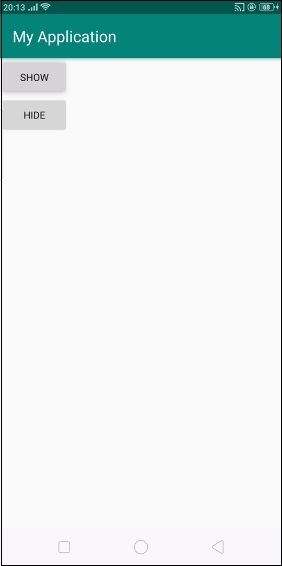
單擊“顯示”按鈕,它將顯示View Stub。現在單擊“隱藏”按鈕,它將隱藏View Stub。
步驟4 - 無需更改manifest.xml。
讓我們嘗試執行您的應用程式。我假設您已將您的實際Android移動裝置連線到您的計算機。要在Android Studio中執行應用程式,請開啟專案中的一個Activity檔案,然後單擊工具欄中的執行圖示 。選擇您的移動裝置作為選項,然後檢查您的移動裝置,它將顯示您的預設螢幕。
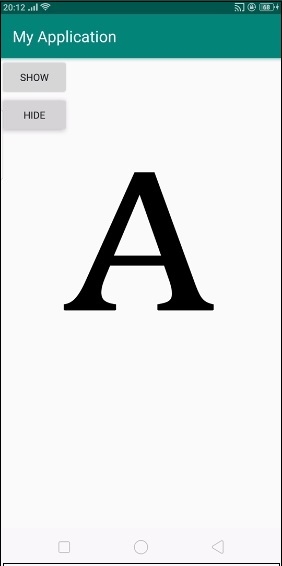
最初,它將顯示如上所示,當您單擊“隱藏”按鈕時,它將消失,如下所示:
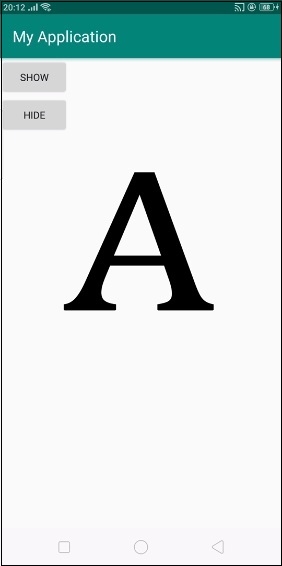
現在單擊“顯示”按鈕,它將顯示ImageView,如下所示:
點選這裡下載專案程式碼

506 次瀏覽
