
 資料結構
資料結構 網路
網路 關係型資料庫管理系統
 作業系統
作業系統 Java
Java MS Excel
 iOS
iOS HTML
HTML CSS
CSS Android
 Python
 C 程式設計
 C++
C++ C#
C# MongoDB
 MySQL
MySQL Javascript
 PHP
PHP 物理學
物理學 化學
化學 生物學
生物學 數學
數學 英語
英語 經濟學
經濟學 心理學
心理學 社會學
社會學 時尚研究
時尚研究 法律研究
法律研究如何使用 PowerShell 獲取頁面檔案設定?
頁面檔案,也稱為 Windows 作業系統中的虛擬記憶體檔案,是作業系統非常有用的一個部分。它透過將一些分頁檔案儲存在名為 Pagefile.sys 的檔案中來幫助減輕物理記憶體的負擔。通常,Windows 作業系統中的此檔案儲存在 C:\ 中,除非進行了修改。
您可以使用 Windows GUI 中的以下步驟檢查頁面檔案設定
系統屬性 → 高階 → 效能 → 設定 → 高階 → 虛擬記憶體 → 更改。

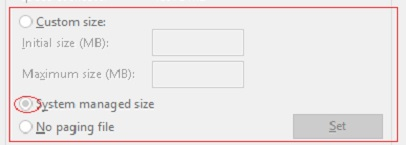
我們在上面的頁面檔案屬性影像中建立了一些塊和圓圈。我們將逐一檢視它們。
首先,要檢查頁面檔案是否自動管理,如第一個圓圈所示,我們將使用以下命令。
PS C:\> (Get-CimInstance Win32_ComputerSystem).AutomaticManagedPagefile
輸出
True

在上圖中,頁面檔案是自動管理的,因此輸出為 true。
其次,我們需要知道頁面檔案是系統管理還是自定義的,您需要使用 CIMInstance 或 WMI 類 Win32_PageFileSetting,但這裡的條件是,如果頁面檔案是自動管理的,則輸出將為 Null,因為在影像本身中您可以看到系統管理部分已停用。
因此,讓我們假設在一臺伺服器上停用了自動頁面檔案管理,當我們使用 Win32_pagefilesetting 命令時,我們將獲得以下詳細資訊。
Get-CimInstance Win32_PageFileSetting | fl *
輸出
Caption               : c:\ 'pagefile.sys'
Description           : 'pagefile.sys' @ c:\
SettingID             : pagefile.sys @ c:
InitialSize           : 0
MaximumSize           : 0
Name                  : c:\pagefile.sys
PSComputerName        :
CimClass              : root/cimv2:Win32_PageFileSetting
CimInstanceProperties : {Caption, Description, SettingID, InitialSize...}
CimSystemProperties   : Microsoft.Management.Infrastructure.CimSystemProperties
在上面的輸出中,我們有 InitialSize 和 MaximumSize,它們指明瞭頁面檔案的自定義大小。如果兩者都為 0,則頁面檔案由系統管理。
第三,要了解頁面檔案驅動器及其當前和峰值使用情況,我們需要使用 CIMInstance 方法和類 Win32_PagefileUsage 類。
PS C:\Users\Administrator> Get-CimInstance Win32_PageFileUsage | fl *
輸出
Status :
Name : C:\pagefile.sys
CurrentUsage : 85
Caption : C:\pagefile.sys
Description : C:\pagefile.sys
InstallDate : 7/5/2020 12:01:30 PM
AllocatedBaseSize     : 1024
PeakUsage             : 127
TempPageFile          : False
PSComputerName        :
CimClass              : root/cimv2:Win32_PageFileUsage
CimInstanceProperties : {Caption, Description, InstallDate, Name...}
CimSystemProperties   : Microsoft.Management.Infrastructure.CimSystemProperties
您可以看到 AllocatedBaseSize(即當前已分配)、TempPageFile(檢查是否建立了臨時頁面檔案)和頁面檔案的 CurrentUsage。
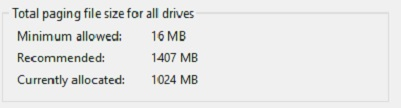
不幸的是,我們無法使用 PowerShell 獲取 Recommended 大小,因為它由系統管理,並且大小會根據系統需求而變化。
您可以使用 -ComputerName 引數在遠端計算機上獲取上面提到的所有頁面檔案設定。

8K+ 閱讀量
