
 資料結構
資料結構 網路
網路 關係資料庫管理系統 (RDBMS)
 作業系統
作業系統 Java
Java MS Excel
 iOS
iOS HTML
HTML CSS
CSS Android
 Python
 C語言程式設計
 C++
C++ C#
C# MongoDB
 MySQL
MySQL Javascript
 PHP
PHP 物理
物理 化學
化學 生物
生物 數學
數學 英語
英語 經濟學
經濟學 心理學
心理學 社會學
社會學 服裝設計
服裝設計 法律研究
法律研究用C語言解釋連結串列中元素的插入
連結串列使用動態記憶體分配,即它們會根據需要增長和縮小。它們被定義為節點的集合。在這裡,節點有兩個部分,分別是資料和連結。資料、連結和連結串列的表示如下:
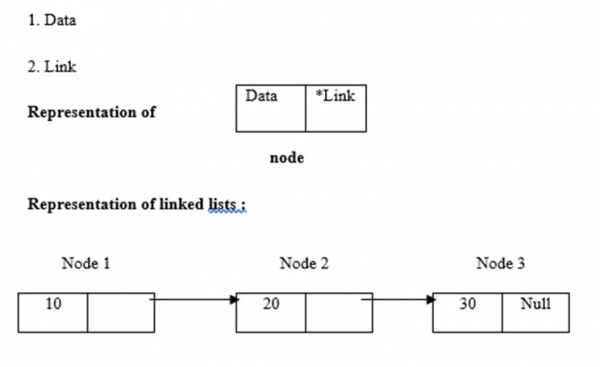
連結串列操作
在C語言中,連結串列有三種操作,如下:
- 插入
- 刪除
- 遍歷
插入
舉個例子,我們在節點2和節點3之間插入節點5。
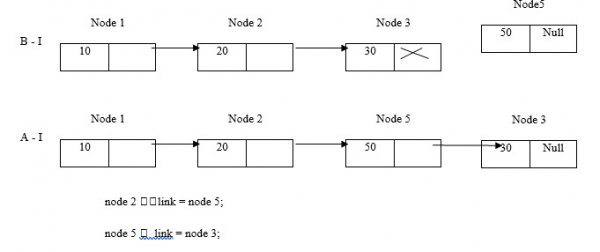
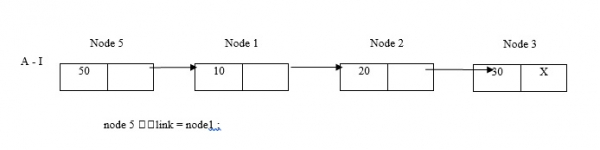
現在,在開頭插入節點5。
在末尾插入節點5。
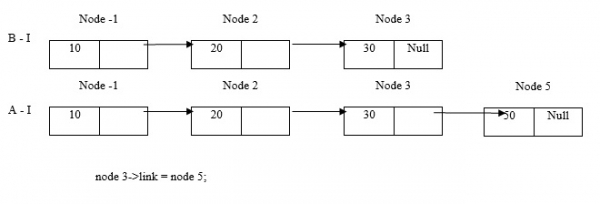
在末尾插入節點5。
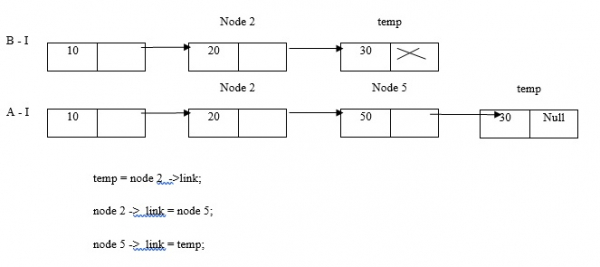
注意
- 由於節點沒有命名,我們無法在節點2之前插入節點5。
- 如果給出其位置,我們可以將節點5插入到2之前。
C程式,用於在連結串列中插入元素
以下是用於在連結串列中插入元素的C程式:
#include <stdio.h>
#include <stdlib.h>
struct node{
   int val;
   struct node *next;
};
void print_list(struct node *head){
   printf("H->");
   while(head){
      printf("%d->", head->val);
      head = head->next;
   }
   printf("……

");
}
void insert_front(struct node **head, int value){
   struct node * new_node = NULL;
   new_node = (struct node *)malloc(sizeof(struct node));
   if (new_node == NULL){
      printf(" Out of memory");
   }
   new_node->val = value;
   new_node->next = *head;
   *head = new_node;
}
void insert_end(struct node **head, int value){
   struct node * new_node = NULL;
   struct node * last = NULL;
   new_node = (struct node *)malloc(sizeof(struct node));
   if (new_node == NULL){
      printf(" Out of memory");
   }
   new_node->val = value;
   new_node->next = NULL;
   if( *head == NULL){
      *head = new_node;
      return;
   }
   last = *head;
   while(last->next) last = last->next;
   last->next = new_node;
}
void insert_after(struct node *head, int value, int after){
   struct node * new_node = NULL;
   struct node *tmp = head;
   while(tmp) {
      if(tmp->val == after) { /*found the node*/
         new_node = (struct node *)malloc(sizeof(struct node));
         if (new_node == NULL) {
            printf("Out of memory");
         }
         new_node->val = value;
         new_node->next = tmp->next;
         tmp->next = new_node;
         return;
      }
      tmp = tmp->next;
   }
}
void insert_before(struct node **head, int value, int before){
   struct node * new_node = NULL;
   struct node * tmp = *head;
   new_node = (struct node *)malloc(sizeof(struct node));
   if (new_node == NULL){
      printf("Out of memory");
      return;
   }
   new_node->val = value;
   if((*head)->val == before){
      new_node->next = *head;
      *head = new_node;
      return;
   }
   while(tmp && tmp->next) {
      if(tmp->next->val == before) {
         new_node->next = tmp->next;
         tmp->next = new_node;
         return;
      }
      tmp = tmp->next;
   }
   /*Before node not found*/
   free(new_node);
}
void main(){
   int count = 0, i, val, after, before;
   struct node * head = NULL;
   printf("Enter no: of elements: ");
   scanf("%d", &count);
   for (i = 0; i < count; i++){
      printf("Enter %dth element: ", i);
      scanf("%d", &val);
      insert_front(&head, val);
   }
   printf("starting list: ");
   print_list(head);
   printf("enter front element: ");
   scanf("%d", &val);
   insert_front(&head, val);
   printf("items after insertion: ");
   print_list(head);
   printf("enter last element: ");
   scanf("%d", &val);
   insert_end(&head, val);
   printf("items after insertion: ");
   print_list(head);
   printf("Enter an ele to insert in the list: ");
   scanf("%d", &val);
   printf("Insert after: ");
   scanf("%d", &after);
   insert_after(head, val, after);
   printf("List after insertion: ");
   print_list(head);
   printf("Enter an ele to insert in the list: ");
   scanf("%d", &val);
   printf("Insert before: ");
   scanf("%d", &before);
   insert_before(&head, val, before);
   printf("List after insertion: ");
   print_list(head);
}
輸出
執行上述程式後,會產生以下結果:
Enter no: of elements: 4
Enter 0th element: 1
Enter 1th element: 2
Enter 2th element: 3
Enter 3th element: 4
starting list: H->4->3->2->1->......
enter front element: 5
items after insertion: H->5->4->3->2->1->......
enter last element: 0
items after insertion: H->5->4->3->2->1->0->......
Enter an ele to insert in the list: 6
Insert after: 0
List after insertion: H->5->4->3->2->1->0->6->......
Enter an ele to insert in the list: 7
Insert before: 5
List after insertion: H->7->5->4->3->2->1->0->6->......

更新於:2024年6月20日
3K+ 次瀏覽

廣告