
 資料結構
資料結構 網路
網路 關係資料庫管理系統 (RDBMS)
 作業系統
作業系統 Java
Java Microsoft Excel
 iOS
iOS HTML
HTML CSS
CSS Android
 Python
 C語言程式設計
 C++
C++ C#
C# MongoDB
 MySQL
MySQL Javascript
 PHP
PHP 物理學
物理學 化學
化學 生物學
生物學 數學
數學 英語
英語 經濟學
經濟學 心理學
心理學 社會學
社會學 服裝設計
服裝設計 法學
法學使用連結串列實現優先佇列 (C語言)
給定資料和優先順序(整數),任務是根據給定的優先順序建立一個連結串列並顯示結果。
佇列是一種先進先出 (FIFO) 資料結構,其中最先插入的元素也是最先被刪除的元素。優先佇列是一種佇列,其中元素的插入和刪除取決於優先順序。它可以使用佇列、棧或連結串列資料結構來實現。優先佇列的實現遵循以下規則:
- 具有最高優先順序的數 據或元素將優先於具有最低優先順序的數 據或元素執行。
- 如果兩個元素具有相同的優先順序,則它們將按照新增到列表中的順序執行。
用於實現優先佇列的連結串列節點將包含三個部分:
- 資料 - 它將儲存整數值。
- 地址 - 它將儲存下一個節點的地址。
- 優先順序 - 它將儲存優先順序,這是一個整數值。它的範圍可以是 0-10,其中 0 代表最高優先順序,10 代表最低優先順序。
示例
輸入
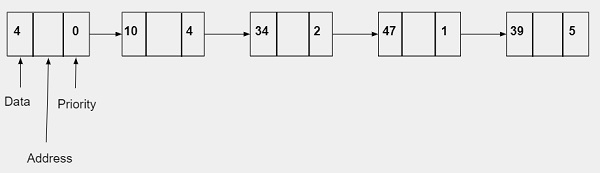
輸出

演算法
Start
Step 1-> Declare a struct node
   Declare data, priority
   Declare a struct node* next
Step 2-> In function Node* newNode(int d, int p)
   Set Node* temp = (Node*)malloc(sizeof(Node))
   Set temp->data = d
   Set temp->priority = p
   Set temp->next = NULL
   Return temp
Step 3-> In function int peek(Node** head)
   return (*head)->data
Step 4-> In function void pop(Node** head)
   Set Node* temp = *head
   Set (*head) = (*head)->next
   free(temp)
Step 5-> In function push(Node** head, int d, int p)
   Set Node* start = (*head)
   Set Node* temp = newNode(d, p)
   If (*head)->priority > p then,
      Set temp->next = *head
      Set (*head) = temp
   Else
   Loop While start->next != NULL && start->next->priority < p
      Set start = start->next
      Set temp->next = start->next
      Set start->next = temp
Step 6-> In function int isEmpty(Node** head)
   Return (*head) == NULL
Step 7-> In function int main()
   Set Node* pq = newNode(7, 1)
   Call function push(&pq, 1, 2)
   Call function push(&pq, 3, 3)
   Call function push(&pq, 2, 0)
   Loop While (!isEmpty(&pq))
   Print the results obtained from peek(&pq)
   Call function pop(&pq)
Stop
示例
#include <stdio.h>
#include <stdlib.h>
// priority Node
typedef struct node {
   int data;
   int priority;
   struct node* next;
} Node;
Node* newNode(int d, int p) {
   Node* temp = (Node*)malloc(sizeof(Node));
   temp->data = d;
   temp->priority = p;
   temp->next = NULL;
   return temp;
}
int peek(Node** head) {
   return (*head)->data;
}
void pop(Node** head) {
   Node* temp = *head;
   (*head) = (*head)->next;
   free(temp);
}
void push(Node** head, int d, int p) {
   Node* start = (*head);
   Node* temp = newNode(d, p);
   if ((*head)->priority > p) {
      temp->next = *head;
      (*head) = temp;
   } else {
      while (start->next != NULL &&
      start->next->priority < p) {
         start = start->next;
      }
      // Either at the ends of the list
      // or at required position
      temp->next = start->next;
      start->next = temp;
   }
}
// Function to check the queue is empty
int isEmpty(Node** head) {
   return (*head) == NULL;
}
// main function
int main() {
   Node* pq = newNode(7, 1);
   push(&pq, 1, 2);
   push(&pq, 3, 3);
   push(&pq, 2, 0);
   while (!isEmpty(&pq)) {
      printf("%d ", peek(&pq));
      pop(&pq);
   }
   return 0;
}
輸出
2 7 1 3

更新於:2019年12月23日
4K+ 瀏覽量

廣告