
 資料結構
資料結構 網路
網路 關係資料庫管理系統 (RDBMS)
 作業系統
作業系統 Java
Java MS Excel
 iOS
iOS HTML
HTML CSS
CSS Android
 Python
 C語言程式設計
 C++
C++ C#
C# MongoDB
 MySQL
MySQL Javascript
 PHP
PHP 物理學
物理學 化學
化學 生物學
生物學 數學
數學 英語
英語 經濟學
經濟學 心理學
心理學 社會學
社會學 服裝設計
服裝設計 法學
法學用C++計算主教一步能訪問的方格總數
在一個以8x8網格表示的棋盤上,我們得到主教的行和列位置。目標是找到主教一步能訪問的方格總數。我們知道主教可以向所有方向移動(對角線左上/下和右上/下)。
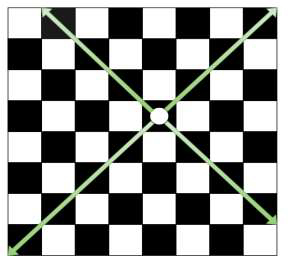
例如
輸入
row = 5, column = 4
輸出
Count of total number of squares that can be visited by Bishop in one move
are: 13
解釋
As shown in above figure the squares that Bishop can cover are 9.
輸入
row = 1, column = 1
輸出
Count of total number of squares that can be visited by Bishop in one move
are: 7
解釋
As this is the corner most position, then Bishop can only cover one
diagonal which can have a maximum of 7 squares.
以下程式中使用的演算法如下 −
在這種方法中,我們將使用水平和垂直最大和最小方格位置來計算對角線方格。
獲取主教位置的整數行和列。
函式squares_visited(int first, int second) 獲取主教的位置並返回它一步能訪問的方格數。
將初始計數設定為0。
左側位置的最小值是行或列位置的最小值 −1。
左側位置的最大值是 8 − 行或 9−列位置的最大值。
右側位置的最小值是行或 9−列位置的最小值 −1。
右側位置的最大值是 8 − 行或列位置的最大值。
總方格數將是上述計算位置的總和。
返回計數作為結果。
示例
#include <bits/stdc++.h>
using namespace std;
int squares_visited(int first, int second){
   int count = 0;
   int min_left = min(first, second) − 1;
   int max_left = 8 − max(first, 9 − second);
   int max_right = 8 − max(first, second);
   int min_right = min(first, 9 − second) − 1;
   count = min_left + min_right + max_right + max_left;
   return count;
}
int main(){
   int row = 3, column = 3;
   cout<<"Count of total number of squares that can be visited by Bishop in one move are: "<<squares_visited(row, column);
   return 0;
}
輸出
如果我們執行上面的程式碼,它將生成以下輸出:
Count of total number of squares that can be visited by Bishop in one move are: 11

更新於:2021年1月5日
686 次瀏覽

廣告