
 資料結構
資料結構 網路
網路 RDBMS
RDBMS 作業系統
作業系統 Java
Java MS Excel
 iOS
iOS HTML
HTML CSS
CSS Android
 Python
 C程式設計
C程式設計 C++
C++ C#
C# MongoDB
 MySQL
MySQL Javascript
 PHP
PHP 物理學
物理學 化學
化學 生物學
生物學 數學
數學 英語
英語 經濟學
經濟學 心理學
心理學 社會學
社會學 服裝設計
服裝設計 法律研究
法律研究C語言中的realloc是什麼?
C 庫記憶體分配函式 void *realloc(void *ptr, size_t size) 嘗試重新調整由 ptr 指向的記憶體塊的大小,該記憶體塊之前已透過呼叫 malloc 或 calloc 分配。
記憶體分配函式
記憶體可以以兩種方式分配,如下所述:
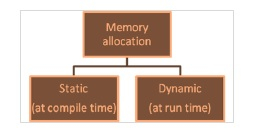
一旦在編譯時分配了記憶體,就不能在執行期間更改它。這將導致記憶體不足或記憶體浪費的問題。
解決方案是在程式執行期間根據使用者的需求動態建立記憶體。
用於動態記憶體管理的標準庫函式如下:
- malloc ( )
- calloc ( )
- realloc ( )
- free ( )
realloc ( ) 函式
它用於重新分配已分配的記憶體。
它可以減少或增加分配的記憶體。
它返回一個指向重新分配記憶體的基地址的 void 指標。
realloc() 函式的語法如下:
Free void *realloc (pointer, newsize);
示例
以下示例顯示了 realloc() 函式的使用。
int *ptr;
ptr = (int * ) malloc (1000);// we can use calloc also
- - -
- - -
- - -
ptr = (int * ) realloc (ptr, 500);
- - -
- - -
ptr = (int * ) realloc (ptr, 1500);
示例
以下是使用 realloc() 函式的 C 程式:
#include<stdio.h>
#include<stdlib.h>
int main(){
   int *ptr, i, num;
   printf("array size is 5
");
   ptr = (int*)calloc(5, sizeof(int));
   if(ptr==NULL){
      printf("Memory allocation failed");
      exit(1); // exit the program
   }
   for(i = 0; i < 5; i++){
      printf("enter number at %d: ", i);
      scanf("%d", ptr+i);
   }
   printf("
Let's increase the array size to 7
 ");
   ptr = (int*)realloc(ptr, 7 * sizeof(int));
   if(ptr==NULL){
      printf("Memory allocation failed");
      exit(1); // exit the program
   }
   printf("
 enter 2 more integers

");
   for(i = 5; i < 7; i++){
      printf("Enter element number at %d: ", i);
      scanf("%d", ptr+i);
   }
   printf("
 result array is:

");
   for(i = 0; i < 7; i++){
      printf("%d ", *(ptr+i) );
   }
   return 0;
}
輸出
執行上述程式時,將產生以下結果:
array size is 5
enter number at 0: 23
enter number at 1: 12
enter number at 2: 45
enter number at 3: 67
enter number at 4: 20
Let's increase the array size to 7
enter 2 more integers
Enter element number at 5: 90
Enter element number at 6: 60
result array is:
23 12 45 67 20 90 60

更新於: 2021年3月17日
577 次瀏覽

廣告