
 資料結構
資料結構 網路
網路 關係資料庫管理系統 (RDBMS)
 作業系統
作業系統 Java
Java MS Excel
 iOS
iOS HTML
HTML CSS
CSS Android
 Python
 C語言程式設計
 C++
C++ C#
C# MongoDB
 MySQL
MySQL Javascript
 PHP
PHP 物理學
物理學 化學
化學 生物學
生物學 數學
數學 英語
英語 經濟學
經濟學 心理學
心理學 社會學
社會學 服裝設計
服裝設計 法律研究
法律研究Python程式:計算包含給定邊的唯一路徑數量
假設我們有一組邊,格式為 (u, v),它們表示一棵樹。對於每條邊,我們必須找到包含該邊的所有唯一路徑的數量,順序與輸入中給出的順序相同。
例如,如果輸入是 edges = [[0, 1],[0, 2],[1, 3],[1, 4]]
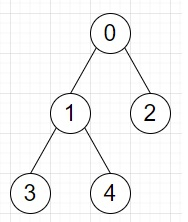
則輸出將為 [6, 4, 4, 4]。
為了解決這個問題,我們將遵循以下步驟:
adj := 從給定邊生成的鄰接表
count := 一個空的對映
定義一個函式 dfs()。它將接收 x, parent 作為引數。
count[x] := 1
對於 adj[x] 中的每個鄰居 nb:
如果 nb 與 parent 相同,則
跳出迴圈
count[x] := count[x] + dfs(nb, x)
返回 count[x]
在主方法中執行以下操作:
dfs(0, -1)
ans := 一個新的列表
對於 edges 中的每條邊 (a, b):
x := count[a] 和 count[b] 中的最小值
將 (x *(count[0] - x)) 新增到 ans 的末尾
返回 ans
示例
讓我們來看下面的實現以更好地理解:
from collections import defaultdict
class Solution:
   def solve(self, edges):
      adj = defaultdict(list)
      for a, b in edges:
         adj[a].append(b)
         adj[b].append(a)
      count = defaultdict(int)
      def dfs(x, parent):
         count[x] = 1
         for nb in adj[x]:
            if nb == parent:
               continue
            count[x] += dfs(nb, x)
         return count[x]
      dfs(0, -1)
      ans = []
      for a, b in edges:
         x = min(count[a], count[b])
         ans.append(x * (count[0] - x))
      return ans
ob = Solution()
edges = [
   [0, 1],
   [0, 2],
   [1, 3],
   [1, 4]
]
print(ob.solve(edges))
輸入
[
   [0, 1],
   [0, 2],
   [1, 3],
   [1, 4]
]
輸出
[6, 4, 4, 4]

更新於:2020年12月22日
288 次瀏覽

廣告