
 資料結構
資料結構 網路
網路 關係型資料庫管理系統
 作業系統
作業系統 Java
Java MS Excel
 iOS
iOS HTML
HTML CSS
CSS Android
 Python
 C 程式設計
 C++
C++ C#
C# MongoDB
 MySQL
MySQL Javascript
 PHP
PHP 物理學
物理學 化學
化學 生物學
生物學 數學
數學 英語
英語 經濟學
經濟學 心理學
心理學 社會學
社會學 服裝設計
服裝設計 法律研究
法律研究如何在 C 語言中使用指標來乘以兩個矩陣?
指標是一個儲存另一個變數地址的變數。
指標的特性
- 指標節省記憶體空間。
- 由於可以直接訪問記憶體位置,因此指標的執行時間更快。
- 藉助指標,可以有效地訪問記憶體,即動態分配和釋放記憶體。
- 指標用於資料結構。
指標的宣告、初始化和訪問
考慮以下語句:
int qty = 179;
在記憶體中,變數可以表示如下:
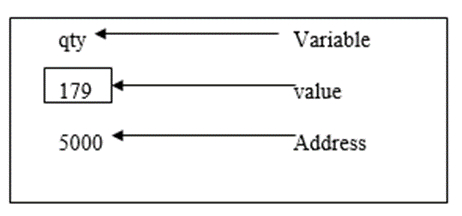
宣告
宣告指標可以如下所示:
Int *p;
這意味著“p”是一個指標變數,它儲存另一個整型變數的地址。
初始化
地址運算子 (&) 用於初始化指標變數。
例如:
int qty = 175;
int *p;
p= &qty;
透過指標訪問變數
要訪問變數的值,使用間接運算子 (*)。
示例
以下是用指標乘以兩個矩陣的 C 程式:
#include <stdio.h>
#define ROW 3
#define COL 3
/* Function declarations */
void matrixInput(int mat[][COL]);
void matrixPrint(int mat[][COL]);
void matrixMultiply(int mat1[][COL], int mat2[][COL], int res[][COL]);
int main() {
   int mat1[ROW][COL];
   int mat2[ROW][COL];
   int product[ROW][COL];
   printf("Enter elements in first matrix of size %dx%d
", ROW, COL);
   matrixInput(mat1);
   printf("Enter elements in second matrix of size %dx%d
", ROW, COL);
   matrixInput(mat2);
   matrixMultiply(mat1, mat2, product);
   printf("Product of both matrices is :
");
   matrixPrint(product);
   return 0;
}
void matrixInput(int mat[][COL]) {
   int row, col;
   for (row = 0; row < ROW; row++) {
      for (col = 0; col < COL; col++) {
         scanf("%d", (*(mat + row) + col));
      }
   }
}
void matrixPrint(int mat[][COL]) {
   int row, col;
   for (row = 0; row < ROW; row++) {
      for (col = 0; col < COL; col++) {
         printf("%d ", *(*(mat + row) + col));
      }
      printf("
");
   }
}
void matrixMultiply(int mat1[][COL], int mat2[][COL], int res[][COL]) {
   int row, col, i;
   int sum;
   for (row = 0; row < ROW; row++) {
      for (col = 0; col < COL; col++) {
         sum = 0;
         for (i = 0; i < COL; i++) {
            sum += (*(*(mat1 + row) + i)) * (*(*(mat2 + i) + col));
         }
         *(*(res + row) + col) = sum;
      }
   }
}
輸出
執行上述程式後,將產生以下輸出:
Enter elements in first matrix of size 3x3
2 3 1
2 5 6
2 6 8
Enter elements in second matrix of size 3x3
1 2 1
2 3 4
5 6 7
Product of both matrices is :
13 19 21
42 55 64
54 70 82

更新於: 2021年3月25日
13K+ 次檢視

廣告