
 資料結構
資料結構 網路
網路 關係資料庫管理系統
 作業系統
作業系統 Java
Java MS Excel
 iOS
iOS HTML
HTML CSS
CSS Android
 Python
 C 語言程式設計
 C++
C++ C#
C# MongoDB
 MySQL
MySQL Javascript
 PHP
PHP 物理學
物理學 化學
化學 生物學
生物學 數學
數學 英語
英語 經濟學
經濟學 心理學
心理學 社會學
社會學 時尚研究
時尚研究 法律研究
法律研究如何在 Python 中使用 Tensorflow 對矩陣的特定元素/行求和?
Tensorflow 是 Google 提供的一個機器學習框架。它是一個開源框架,與 Python 結合使用以實現演算法、深度學習應用程式等等。它用於研究和生產目的。
它具有最佳化技術,有助於快速執行復雜的數學運算。這是因為它使用了 NumPy 和多維陣列。這些多維陣列也稱為“張量”。該框架支援使用深度神經網路。它具有高度可擴充套件性,並附帶許多流行的資料集。它使用 GPU 計算並自動管理資源。
可以使用以下程式碼行在 Windows 上安裝“tensorflow”包:
pip install tensorflow
張量是 TensorFlow 中使用的資料結構。它有助於連線流圖中的邊。此流圖稱為“資料流圖”。張量只不過是多維陣列或列表。
我們將使用 Jupyter Notebook 來執行這些程式碼。可以使用“pip install tensorflow”在 Jupyter Notebook 上安裝 TensorFlow。
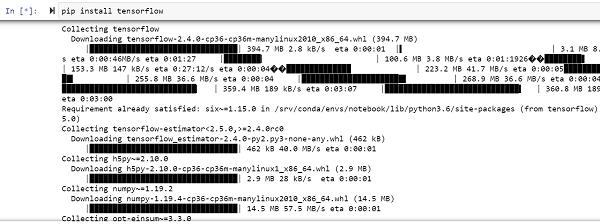
以下是一個示例:
示例
import tensorflow as tf
import numpy as np

matrix_1 = tf.Variable([[1,2,3],[4,5,8],[9,10,0]])
print("The matrix is ")
print (matrix_1)

print("The sum of all elements ")
result = tf.reduce_sum(matrix_1)
print(result)
print("The sum of specific rows is")
result = tf.reduce_sum(matrix_1, 1)
print(result)
輸出
The matrix is
<tf.Variable 'Variable:0' shape=(3, 3) dtype=int32, numpy=
array([[ 1, 2, 3],
   [ 4, 5, 8],
   [ 9, 10, 0]], dtype=int32)>
The sum of all elements
tf.Tensor(42, shape=(), dtype=int32)
The sum of specific rows is
tf.Tensor([ 6 17 19], shape=(3,), dtype=int32)
解釋
匯入所需的包併為其提供別名,以便於使用。
使用 Numpy 包建立矩陣。
使用“reduce_sum”函式查詢矩陣所有值的總和。
如果除了傳遞矩陣之外,還將特定值傳遞給“reduce_sum”,則它會計算每一行的總和。
結果輸出顯示在控制檯上。

更新於: 2021年1月19日
329 次檢視

廣告