
 資料結構
資料結構 網路
網路 關係型資料庫管理系統 (RDBMS)
 作業系統
作業系統 Java
Java MS Excel
 iOS
iOS HTML
HTML CSS
CSS Android
 Python
 C程式設計
C程式設計 C++
C++ C#
C# MongoDB
 MySQL
MySQL Javascript
 PHP
PHP 物理
物理 化學
化學 生物
生物 數學
數學 英語
英語 經濟學
經濟學 心理學
心理學 社會學
社會學 服裝設計
服裝設計 法學
法學用示例解釋C語言中的volatile和restrict型別限定符
型別限定符在C程式語言中為現有資料型別新增特殊屬性。
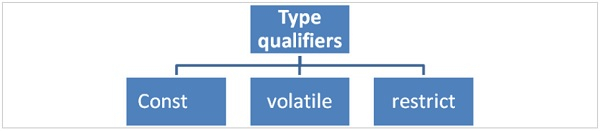
C語言中有三個型別限定符,下面解釋volatile和restrict型別限定符:
Volatile
volatile型別限定符用於告訴編譯器變數是共享的。也就是說,如果一個變數被宣告為volatile,它可能被其他程式(或)實體引用和更改。
例如,volatile int x;
Restrict
這僅與指標一起使用。它表明指標只是訪問解引用資料的初始方式。它為編譯器最佳化提供了更多幫助。
示例程式
以下是volatile型別限定符的C程式:
   int *ptr
   int a= 0;
   ptr = &a;
   ____
   ____
   ____
      *ptr+=4; // Cannot be replaced with *ptr+=9
   ____
   ____
   ____
      *ptr+=5;
在這裡,編譯器不能將語句*ptr+=4和*ptr+=5替換為一個語句*ptr+=9。因為,不清楚變數'a'能否直接訪問(或)透過其他指標訪問。
例如:
   restrict int *ptr
   int a= 0;
   ptr = &a;
   ____
   ____
   ____
      *ptr+=4; // Can be replaced with *ptr+=9
   ____
   ____
      *ptr+=5;
____
   ____
在這裡,編譯器可以將兩個語句替換為一個語句*ptr+=9。因為它確定變數無法透過任何其他資源訪問。
示例
以下是使用restrict關鍵字的C程式:
#include<stdio.h>
void keyword(int* a, int* b, int* restrict c){
   *a += *c;
   // Since c is restrict, compiler will
   // not reload value at address c in
   // its assembly code.
   *b += *c;
}
int main(void){
   int p = 10, q = 20,r=30;
   keyword(&p, &q,&r);
   printf("%d %d %d", p, q,r);
   return 0;
}
輸出
執行上述程式時,會產生以下結果:
40 50 30

更新於:2021年3月8日
854 次瀏覽

廣告