
 資料結構
資料結構 網路
網路 RDBMS
RDBMS 作業系統
作業系統 Java
Java MS Excel
 iOS
iOS HTML
HTML CSS
CSS Android
 Python
 C 程式設計
 C++
C++ C#
C# MongoDB
 MySQL
MySQL Javascript
 PHP
PHP 物理
物理 化學
化學 生物
生物 數學
數學 英語
英語 經濟學
經濟學 心理學
心理學 社會學
社會學 時裝設計
時裝設計 法律研究
法律研究在 Java 中的內部窗格中顯示多個元件
首先,在 JDesktopPane 中設定一個內部窗格 -
JDesktopPane desktopPane = new JDesktopPane();
JInternalFrame intFrame = new JInternalFrame("Our Frame", true, true, true, true);
desktopPane.add(intFrame);
現在,設定內部窗格的邊界 -
intFrame.setBounds(50, 90, 200, 250);
建立兩個元件 -
JLabel label = new JLabel(intFrame.getTitle(), JLabel.CENTER);
JButton button = new JButton("Demo Button");
將兩個元件新增到內部窗格 -
intFrame.add(label, BorderLayout.CENTER);
intFrame.add(button, BorderLayout.WEST);
以下是在內部窗格中顯示多個元件的一個示例 -
package my;
import java.awt.BorderLayout;
import javax.swing.JButton;
import javax.swing.JDesktopPane;
import javax.swing.JFrame;
import javax.swing.JInternalFrame;
import javax.swing.JLabel;
public class SwingDemo {
   public static void main(final String[] args) {
      JFrame frame = new JFrame();
      frame.setDefaultCloseOperation(JFrame.EXIT_ON_CLOSE);
      JDesktopPane desktopPane = new JDesktopPane();
      JInternalFrame intFrame = new JInternalFrame("Our Frame", true, true, true, true);
      desktopPane.add(intFrame);
      intFrame.setBounds(50, 90, 200, 250);
      JLabel label = new JLabel(intFrame.getTitle(), JLabel.CENTER);
      JButton button = new JButton("Demo Button");
      intFrame.add(label, BorderLayout.CENTER);
      intFrame.add(button, BorderLayout.WEST);
      intFrame.setVisible(true);
      frame.add(desktopPane, BorderLayout.CENTER);
      frame.setSize(600, 500);
      frame.setVisible(true);
   }
}
輸出
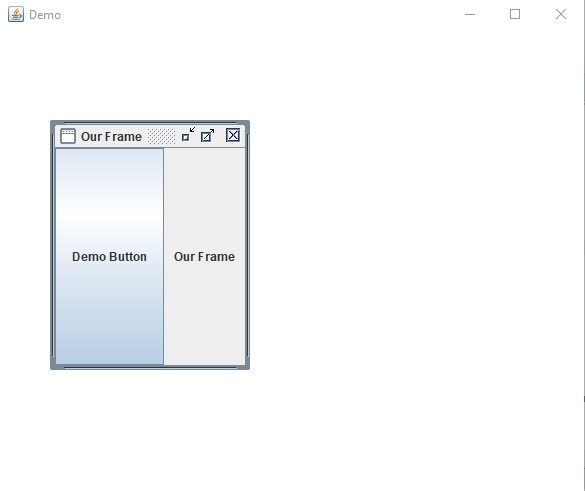
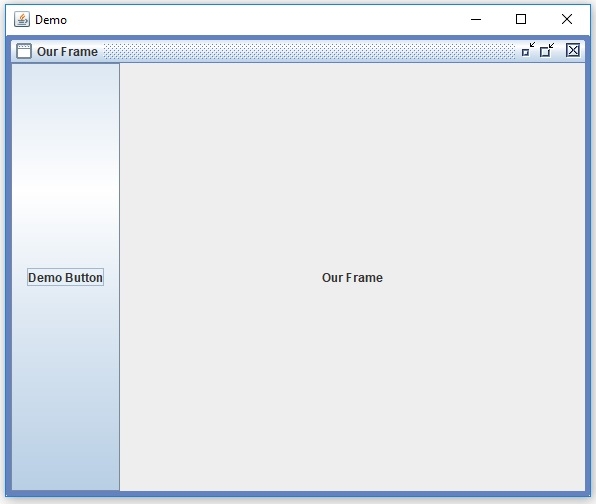
以下是在上面顯示的內部窗格上單擊最大化按鈕後的結果 -

更新於:30-Jul-2019
373 次瀏覽

廣告