
 資料結構
資料結構 網路
網路 RDBMS
RDBMS 作業系統
作業系統 Java
Java MS Excel
 iOS
iOS HTML
HTML CSS
CSS Android
 Python
 C語言程式設計
 C++
C++ C#
C# MongoDB
 MySQL
MySQL Javascript
 PHP
PHP 物理學
物理學 化學
化學 生物學
生物學 數學
數學 英語
英語 經濟學
經濟學 心理學
心理學 社會學
社會學 時尚研究
時尚研究 法律研究
法律研究列印有趣圖案的程式
解決有趣的圖案問題可以增強對迴圈的理解。它們至關重要,因為它們有助於構建特定程式語言的堅實基礎。各種型別的圖案,包括基於數字、基於星號和基於字母的圖案。在本文中,我們將討論一些列印有趣星號圖案的 Java 程式。
列印有趣圖案的程式
圖案 1
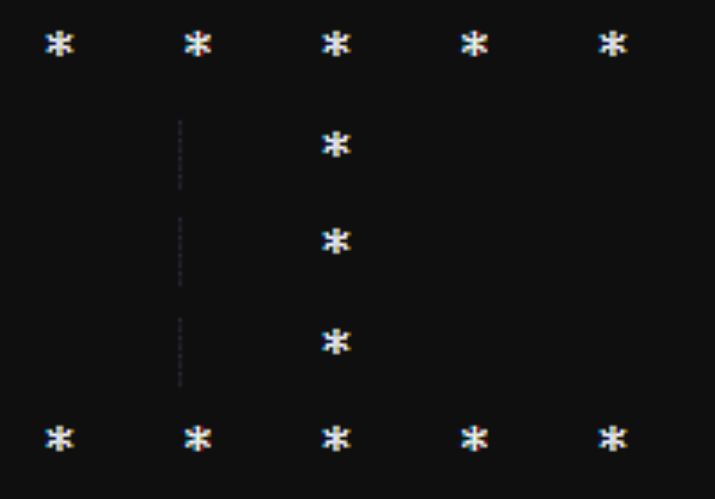
方法
宣告並初始化一個整數“n”,它指定行數和列數。
定義一個 for 迴圈,該迴圈將執行到“n”。在這個迴圈中定義一個 if-else 塊。
if 塊將在第 1 行和最後一行列印“n”次星號,else 塊將在第 2 行到第 4 行列印“n/2”次空格,並在中間列印一個星號。
示例
public class P1 {
   public static void main(String[] args) {
     int n = 5;
     for(int i = 1; i <= n; i++) {
       // till number of rows
       if(i == 1 || i == n) {
         for(int str = 1; str <= n; str++) {
            System.out.print("*\t");
         }
       } else {
         for(int spc = 1; spc <= n/2; spc++) {
            System.out.print("\t");
         }
         for(int str = 1; str <= 1; str++){
            System.out.print("*");
         }
       }
       System.out.println();
       // to move cursor to next line
     }
   }
}
輸出
*	*	*	*	*
		*
		*
		*
*	*	*	*	*
圖案 2
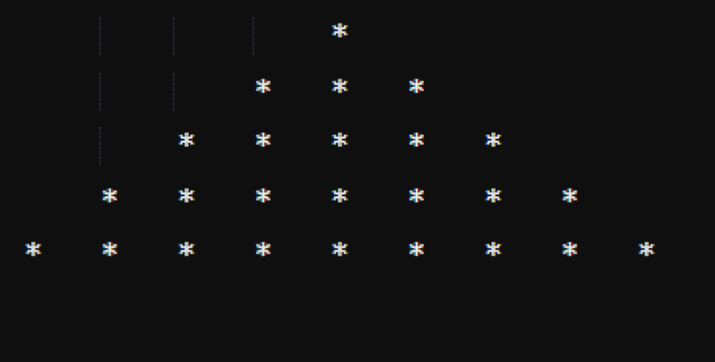
方法
宣告並初始化一個整數“n”,它指定行數。
建立一個巢狀的 for 迴圈,外部迴圈將執行到“n”,內部 for 迴圈將執行到空格數並列印空格。列印後,我們將空格計數減 1。
再次使用另一個內部 for 迴圈,該迴圈將執行到星號數並列印星號。列印後,我們將星號計數加 2。
示例
public class P2 {
   public static void main(String[] args) {
      int n = 5;
      int spc = n-1; // initial space count
      int str = 1; // initial star count
      for(int i = 1; i <= n; i++) {
         for(int j = 1; j <= spc; j++) { // spaces
            System.out.print("\t");
         }
         spc--;
         for(int k = 1; k <= str; k++) { // stars
            System.out.print("*\t");
         }
         str += 2;
         System.out.println();
      }
   }
}
輸出
				*
			*	*	*
		*	*	*	*	*
	*	*	*	*	*	*	*
*	*	*	*	*	*	*	*	*
圖案 3
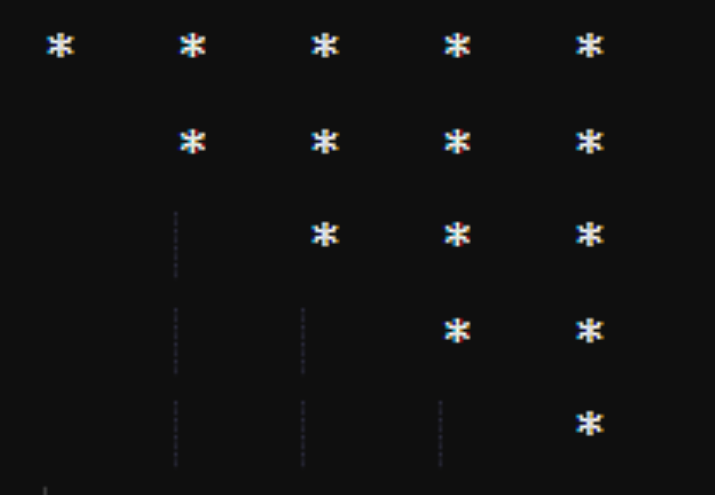
方法
宣告並初始化一個整數“n”,它指定行數。
定義巢狀的 for 迴圈,外部迴圈將從“n”執行到 1,第一個內部迴圈將列印空格,第二個內部迴圈將列印星號。
示例
public class P3 {
   public static void main(String[] args) {
      int n=5;
      for(int i = n; i >= 1; i--) {
         for(int spc = n-i; spc >= 1; spc--){ // spaces
            System.out.print("\t");
         }
         for(int str = 1; str <= i; str++){ // stars
            System.out.print("*\t");
         }
         System.out.println();
      }
   }
}
輸出
*	*	*	*	*
	*	*	*	*
		*	*	*
			*	*
				*
圖案 4
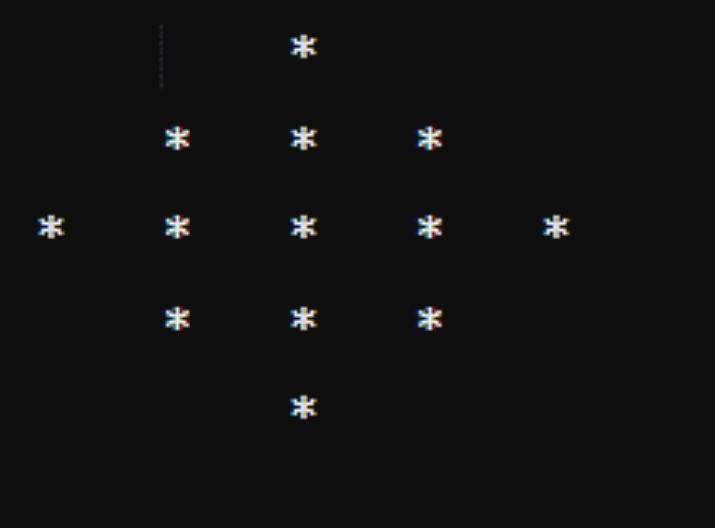
方法
宣告並初始化一個整數“n”,它指定行數。
建立一個巢狀的 for 迴圈,外部迴圈將執行到“n”,第一個內部 for 迴圈將執行到空格數並列印空格。第二個內部迴圈將列印星號。
現在,使用一個 if-else 塊,if 塊將檢查行號是否小於 3。如果小於 3,則執行 if 塊以遞減空格計數並遞增星號計數。
如果行號大於 2,則執行 else 塊以遞增空格計數並遞減星號計數。
示例
public class P4 {
   public static void main(String[] args) {
     int n = 5;
     int spc = 2;
     // initial space count
     int str = 1;
     // initial star count
     for (int i = 1; i <= n; i++) {
       for (int j = 1; j <= spc; j++) {
       // spaces
         System.out.print("\t");
       }
       for (int j = 1; j <= str; j++) {
       // stars
         System.out.print("*\t");
       }
       if ( i <= 2) {
         spc--;
         str += 2;
       } else {
         spc++;
         str -= 2;
       }
       System.out.println();
     }
   }
}
輸出
		*
	*	*	*
*	*	*	*	*
	*	*	*
		*
圖案 5
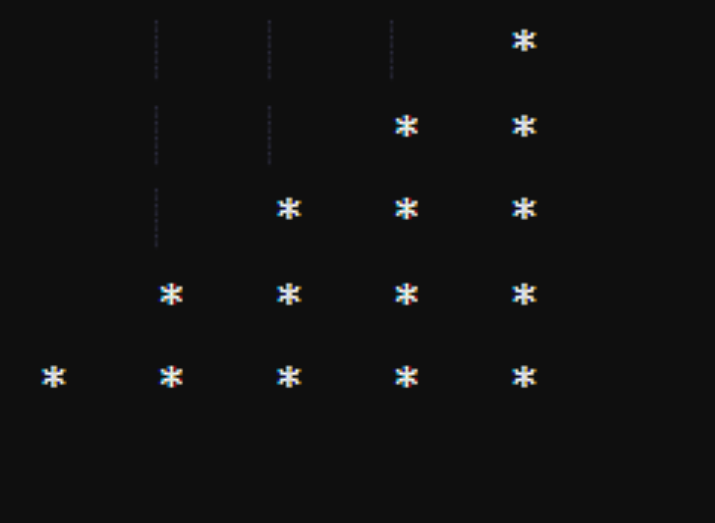
方法
宣告並初始化一個整數“n”,它指定行數。
定義巢狀的 for 迴圈,外部迴圈將執行到“n”,第一個內部迴圈將列印空格,第二個內部迴圈將列印星號。
示例
public class P5 {
   public static void main(String[] args) {
     int n = 5;
     for(int i = 1; i <= n; i++){
       for(int spc = 1; spc <= n-i; spc++) {
         System.out.print("\t");
       }
       for(int str = 1; str <= i; str++) {
         System.out.print("*\t");
       }
       System.out.println();
     }
   }
}
輸出
				*
			*	*
		*	*	*
	*	*	*	*
*	*	*	*	*
結論
在本文中,我們討論了關於有趣星號圖案的問題。這些圖案解決方案將幫助您解碼圖案問題的邏輯,並使您能夠獨立解決其他圖案。

336 次瀏覽
