
 資料結構
資料結構 網路
網路 關係資料庫管理系統
 作業系統
作業系統 Java
Java MS Excel
 iOS
iOS HTML
HTML CSS
CSS Android
 Python
 C 程式設計
 C++
C++ C#
C# MongoDB
 MySQL
MySQL Javascript
 PHP
PHP 物理
物理 化學
化學 生物
生物 數學
數學 英語
英語 經濟學
經濟學 心理學
心理學 社會學
社會學 服裝設計
服裝設計 法律研究
法律研究Python 程式檢查機器人能否到達目標位置
假設我們有一個機器人,目前位於 (0, 0) 位置(笛卡爾平面)。如果我們有一系列它可以執行的移動,包含 N(北)、S(南)、W(西)和 E(東)。我們必須檢查它是否可以到達目標座標 (x, y)。
因此,如果輸入類似於 moves = ['N','N','E','E','S'], (x,y) = (2,1),則輸出為 True。
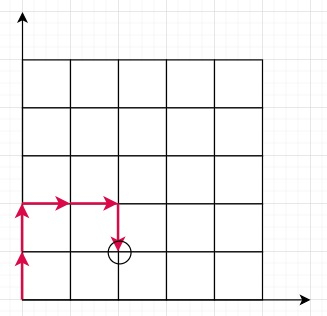
為了解決這個問題,我們將遵循以下步驟:
- temp_coord := [0,0]
- 對於 moves 中的每個移動,執行以下操作:
- 如果 move 等於 "N",則
- temp_coord[1] := temp_coord[1] + 1
- 否則,如果 move 等於 "S",則
- temp_coord[1] := temp_coord[1] - 1
- 否則,如果 move 等於 "E",則
- temp_coord[0] := temp_coord[0] + 1
- 否則,如果 move 等於 "W",則
- temp_coord[0] := temp_coord[0] - 1
- 如果 move 等於 "N",則
- 如果 temp_coord[0] 等於 coord[0] 且 temp_coord[1] 等於 coord[1],則返回 True,否則返回 false。
讓我們看看以下實現以獲得更好的理解:
示例
class Solution:
   def solve(self, moves, coord):
      temp_coord = [0,0]
      for move in moves:
         if move == "N":
            temp_coord[1] += 1
         elif move == "S":
            temp_coord[1] -= 1
         elif move == "E":
            temp_coord[0] += 1
         elif move == "W":
            temp_coord[0] -= 1
      return temp_coord[0] == coord[0] and temp_coord[1] == coord[1]
ob = Solution()
moves = ['N','N','E','E','S']
coord = [2,1]
print(ob.solve(moves, coord))
輸入
['N','N','E','E','S'], [2,1]
輸出
True

更新於: 2020年10月7日
363 次檢視

廣告