
 資料結構
資料結構 網路
網路 關係型資料庫管理系統(RDBMS)
 作業系統
作業系統 Java
Java MS Excel
 iOS
iOS HTML
HTML CSS
CSS Android
 Python
 C語言程式設計
 C++
C++ C#
C# MongoDB
 MySQL
MySQL Javascript
 PHP
PHP 物理學
物理學 化學
化學 生物學
生物學 數學
數學 英語
英語 經濟學
經濟學 心理學
心理學 社會研究
社會研究 時尚研究
時尚研究 法律研究
法律研究C++中的直線反射
假設我們在 2D 平面上有 n 個點,我們需要檢查是否存在一條與 y 軸平行的線可以對稱反射給定點,換句話說,檢查是否存在一條線,在所有點都沿給定線反射後,原始點集與反射點集相同。
因此,如果輸入為 points = [[1,1],[-1,1]]
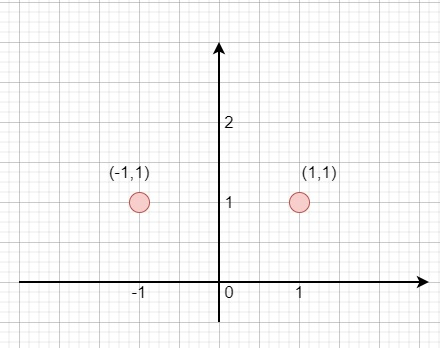
那麼輸出將為真
為了解決這個問題,我們將按照以下步驟操作:-
定義一個集合 ok
n := points 的大小
minVal := 無窮大
maxVal := -無窮大
對於 initialize i := 0,當 i < n,更新(使 i 增加 1),執行以下操作:-
minVal := minVal 與 points[i, 0] 的最小值
maxVal := maxVal 與 points[i, 0] 的最大值
將 points[i] 插入 ok 中
mid := maxVal + minVal
對於 initialize i := 0,當 i < n,更新(使 i 增加 1),執行以下操作:-
x := points[i, 0]
y := points[i, 1]
x := mid - x
如果 { x, y } 不在 ok 中,那麼 -
返回 false
返回 true
示例
讓我們看一下以下實現以獲得更好的理解 -
#include <bits/stdc++.h>
using namespace std;
class Solution {
public:
   bool isReflected(vector<vector<int<>& points) {
      set<vector<int< > ok;
      int n = points.size();
      int minVal = INT_MAX;
      int maxVal = INT_MIN;
      for (int i = 0; i < n; i++) {
         minVal = min(minVal, points[i][0]);
         maxVal = max(maxVal, points[i][0]);
         ok.insert(points[i]);
      }
      int mid = maxVal + minVal;
      for (int i = 0; i < n; i++) {
         int x = points[i][0];
         int y = points[i][1];
         x = mid - x;
         if (!ok.count({ x, y }))
            return false;
      }
      return true;
   }
};
main(){
   Solution ob;
   vector<vector<int<> v = {{1,1},{-1,1}};
   cout << (ob.isReflected(v));
}
輸入
{{1,1},{-1,1}}輸出
1

更新於:19-Nov-2020
402 次檢視

廣告